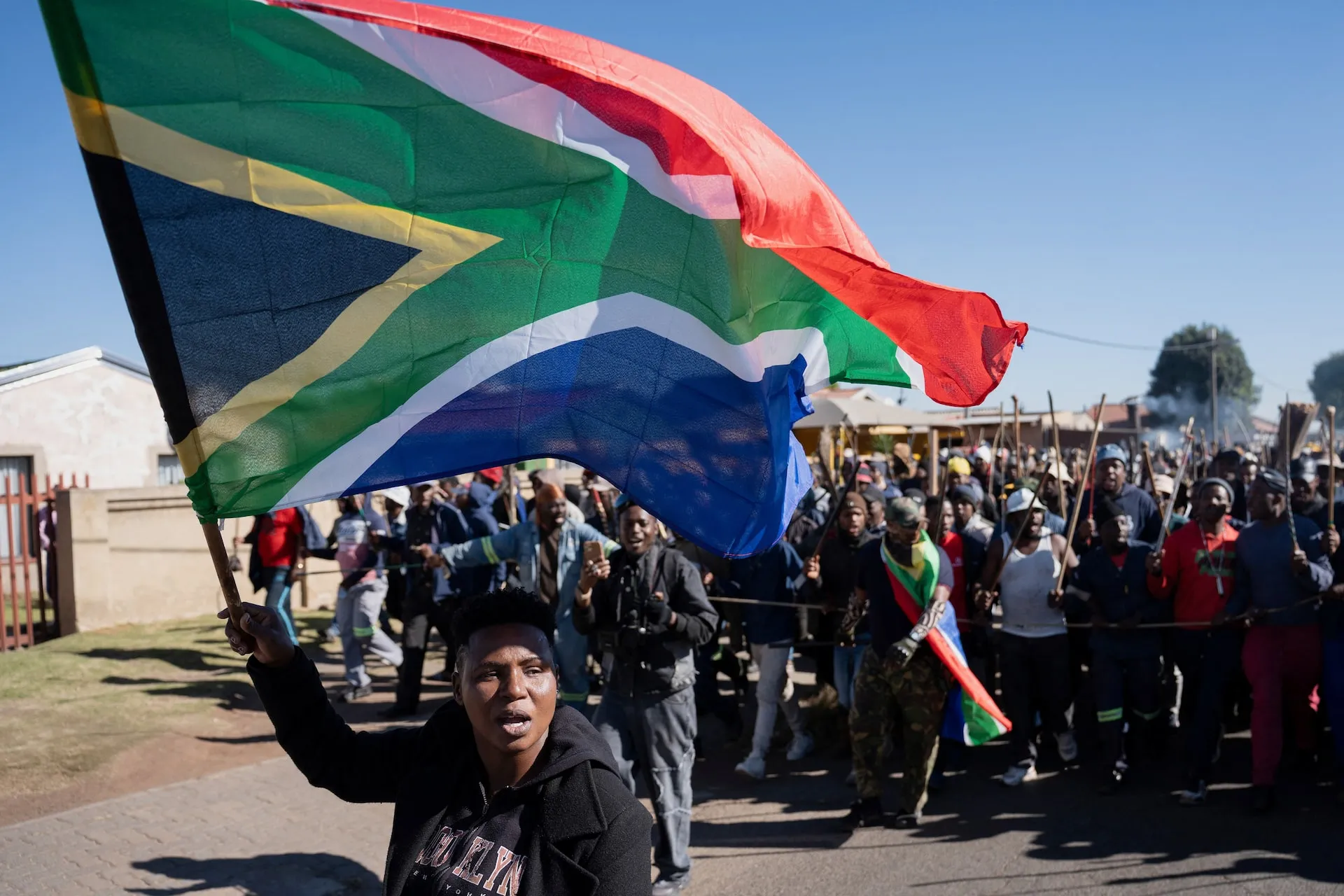
President Cyril Ramaphosa has vowed to tackle the root causes of xenophobic attacks in South Africa, a move prompted by recent anti-immigrant demonstrations.
Citizens from Ghana, Nigeria, Malawi, and Mozambique are being repatriated after becoming embroiled in the unrest, with reports emerging that some incidents have escalated into violence. The death toll for Mozambican nationals stands at a sobering five individuals.
Related ↗Soldier under investigation for fatal shooting by Israeli military police.Ramaphosa vowed to tackle those manipulating public anxiety over undocumented immigration for self-serving purposes, his statement made during a live broadcast, though he didn't outline specific measures.
President Ramaphosa emphasized that no group should exploit genuine public anxieties to undermine national stability by fomenting chaos and brutality in South Africa.
Read next ↗President Trump vows to urge restraint from Israel in response to Iranian retaliation.Citizens are warned not to harass individuals on public streets by demanding their identification documents, as this is a matter for the authorities alone to manage.
Immigrant communities in South Africa frequently face blame for the country's economic struggles, including soaring unemployment rates and rising crime statistics. Populist leaders exploit these sentiments to further their own agendas, critics argue.
President Ramaphosa emphasized that migrant communities are unfairly shouldering the blame for socio-economic issues.
Measures are being implemented by the government to tackle migration issues, such as enforcing regulations more strictly, reviewing existing legislation, and collaborating internationally to combat the underlying drivers of unauthorized immigration.
Policies aimed at addressing xenophobic violence in South Africa include establishing specialized courts to expedite immigration proceedings. The government is also updating identification documents for citizens and legal residents, replacing traditional "green book" IDs with advanced digital ID cards featuring biometric data.
South African authorities are facing mounting pressure from Ghana's Foreign Minister Samuel Okudjeto Ablakwa, who revealed that his country is documenting the losses suffered by its citizens as a result of xenophobic violence. This data will be crucial in potential legal proceedings against perpetrators.