During a month-long experiment, I immersed myself in LibreOffice, OnlyOffice, and other top-rated open-source office software solutions to assess their capabilities. My findings led me to make an unexpected decision about investing in proprietary alternatives.
01Open-source office software options exist.
›Competition heats up among open-source office software options.
The open-source productivity landscape has evolved significantly over time, often flying under the radar of mainstream recognition. LibreOffice stands out as a stalwart pioneer, its roots tracing back to OpenOffice.org in the early 2000s. Today, this robust suite encompasses word processing, spreadsheets, presentations, and even database management capabilities. The Document Foundation diligently oversees the project, releasing frequent updates that ensure seamless compatibility across Windows, macOS and Linux platforms. For users unfamiliar with LibreOffice, its interface may seem somewhat antiquated, yet it still delivers reliable performance for straightforward document creation tasks.
Related ↗US AI models are being considered for access by trusted partners of the G7 leaders.OnlyOffice diverges from the norm by prioritizing cloud collaboration. Its open-source desktop editors serve as a foundation for this focus, generating most of its commercial revenue through this aspect. The user interface closely resembles Microsoft Office, which is intentional and streamlines the transition for those familiar with Word or Excel. Compatibility tests reveal that OnlyOffice excels in handling.docx.xlsx, and.pptx files, outperforming LibreOffice in this regard.
The open-source office software market boasts several notable players beyond the two most prominent ones. Calligra Suite, developed by the KDE project, may not receive widespread attention outside Linux communities, but its polished interface warrants consideration. Meanwhile, WPS Office offers a free version, although it's worth noting that the company behind it is based in China and their software is closed-source. For those seeking web-based alternatives, ONLYOFFICE Docs and Collabora Online can integrate with self-hosted platforms like Nextcloud to create a customized Google Workspace equivalent.
Read next ↗Gigabit internet purchase limited by a faulty switch port, restricting speed to 100Mbps unexpectedly.
07Office's performance remains superior.
›Performance lags become starkly apparent at critical moments.
Open-source Office alternatives often excel until they reach their breaking point, which unfortunately coincides with the most critical moments. Despite significant advancements in LibreOffice's compatibility with Microsoft file formats, it still falls short in several key areas. When exchanging.docx files between Word and LibreOffice, minor discrepancies become apparent after repeated use: a table may shift slightly, fonts are silently substituted, tracked changes appear distorted, or mail merges behave erratically. While occasional issues can be tolerated, frequent revisions over time can exacerbate these problems.
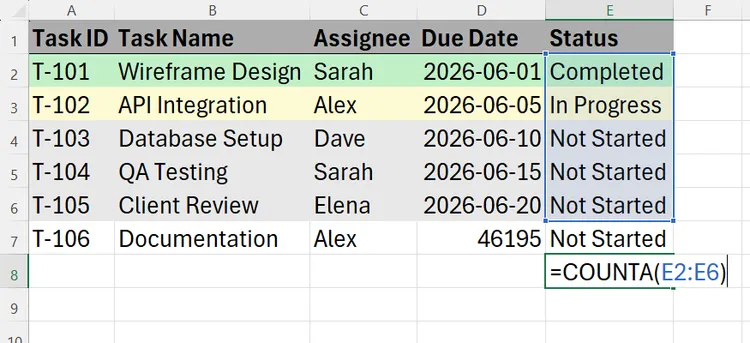
Excel's formula engine is massive and LibreOffice Calc surprisingly accommodates a substantial portion of it, yet peculiarities arise. The true challenge lies with macros, specifically VBA macros deeply ingrained in numerous business spreadsheets. Unfortunately, no reliable substitute exists within LibreOffice, which relies on its own Basic scripting language. For professionals who heavily rely on Excel automation, this limitation presents an insurmountable barrier.
While presentations with basic animations hold up relatively well, any intricate design elements are prone to distortion when opened in OnlyOffice or LibreOffice Impress due to PowerPoint's convoluted animation system.
The Office ecosystem is supported by a robust infrastructure: Teams integration, SharePoint, and seamless real-time co-authoring across organizations without the need for identical self-hosted servers. Microsoft has invested decades in developing this connective tissue around its suite, making it virtually impossible for open-source alternatives to replicate these network effects at scale.
I'm not dismissing alternatives entirely. They're acceptable options if you prefer them. However from my perspective, the compromises involved in using them outweigh any potential benefits, even when the drawbacks seem minor and manageable.

19Microsoft 365's premium features shine.
›Performance issues mount with open-source options.
Managing open-source alternatives can be a frustrating experience, but after a month of dealing with these issues, I decided to stick with what I know. My Microsoft 365 subscription was due for renewal, and at $10 per month for the personal plan, it's hard to argue against its value. The package includes Word, Excel, PowerPoint, OneNote, and Teams, as well as a generous 1TB of OneDrive storage.
Working with simple documents makes a strong case for open-source alternatives, assuming you rarely share files with Word users, don't rely on macros or complex formatting, and are driven by the free software philosophy. While these reasons are valid, they shouldn't be overstated. LibreOffice stands out as an impressive project that offers genuine value to schools, governments, and large organizations seeking significant cost savings through reduced licensing fees.
Operating in a Microsoft-dominated world, individual knowledge workers often find themselves paying a steep price in time and effort when opting for open-source alternatives. The cost of using non-Microsoft formats can be substantial, manifesting as troubleshooting headaches and occasional file compatibility issues. While Microsoft 365 may not be the cheapest option, it offers significant benefits by streamlining workflow and minimizing friction. Furthermore, its mobile apps have reached a high level of quality, and web-based versions of Word and Excel excel at collaborative editing. In some cases, prioritizing efficiency means investing in a reliable solution like Microsoft 365 to free up time for more important tasks.
›Cut Costs with Office Software Alternatives.
›Switched to alternatives, still paid monthly.
While the open-source Office environment has a more favorable public image, those deeply invested in specific file formats often find Microsoft's suite to be the most convenient option available. Time-consuming workarounds can negate the initial cost savings of free alternatives.