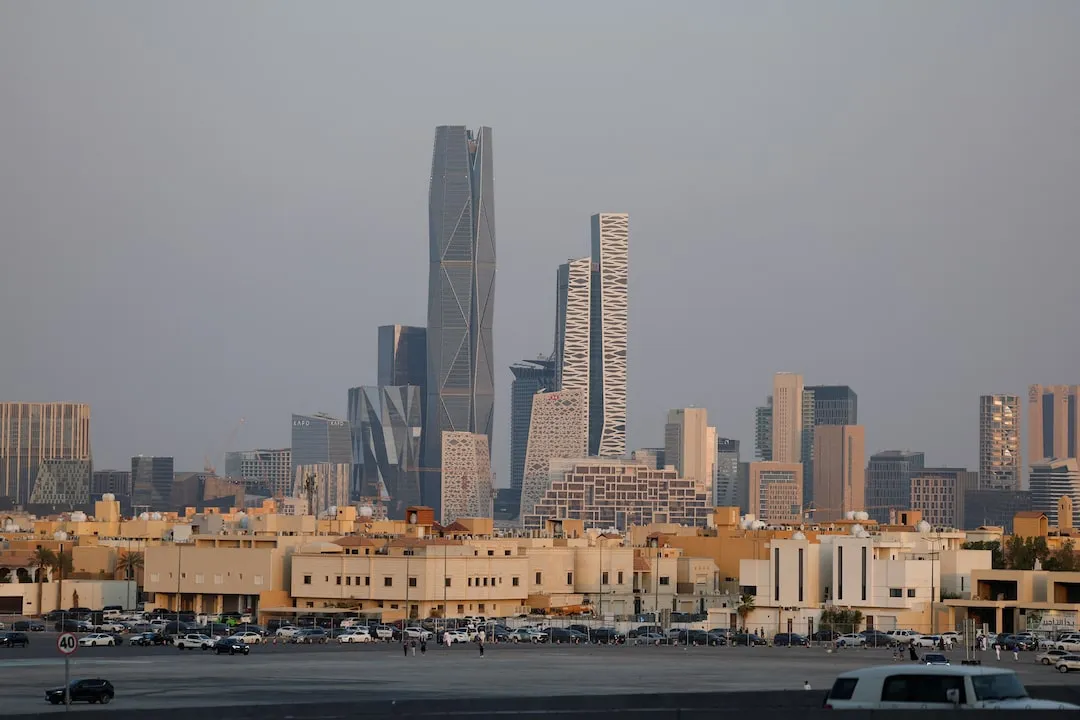
The country's internal market and geographical advantages serve as a protective buffer during times of conflict. Meanwhile, certain companies from the Gulf region are investigating opportunities in the Saudi market.
Sara Amini, a food-tech entrepreneur, traveled to Riyadh to investigate how Gulf companies continued investing during the Iran conflict.
Related ↗IDR survey reveals UK pay settlements remain steady at 3.5% for a second consecutive month.Restaurants in Saudi Arabia were bustling with activity, while businesses continued to discuss expansion plans, a stark contrast to neighboring Gulf economies that suffered significantly during the conflict.
Saudi Arabia's economy demonstrates a remarkable ability to withstand the challenges of wartime conflicts, with many businesses operating as if nothing out of the ordinary was happening.
Read next ↗Gulf region stock markets decline sharply today suddenly.The Saudi economy's performance is far from typical under wartime conditions. According to the International Monetary Fund, a notable dip in growth is anticipated for this year, with projections indicating a decrease to around 2%, down from its earlier forecast of 3.1% in April.
A protracted war could undermine investor faith in the long run, jeopardizing future economic expansion and diversification efforts significantly.
The resilience of Saudi Arabia's economy during wartime conflicts is a testament to its ability to adapt and thrive despite external challenges. A robust domestic market and strategic redirection of oil and logistics routes have contributed significantly to this remarkable stability, particularly in comparison to neighboring countries.
Wednesday's survey revealed that Saudi Arabia's non-oil private sector experienced its quickest growth in three months during May, driven by enhanced domestic demand and more stable supply chains despite muted business confidence.
According to Naif Al-Ghaith, chief economist at Riyad Bank, robust production levels and fresh orders propelled economic growth, bolstered by rising local demand and the resumption of stalled projects.
FundRock ManCo Saudi's managing director Walid Hayeck notes an uptick in requests from local investors to establish new funds within the kingdom.
Capital is being repatriated from neighboring GCC countries, likely due to a desire for security and stability in uncertain times.


13Economic Resilience Prevails
Saudi Arabia's Vision 2030 initiative, championed by Crown Prince Mohammed bin Salman, is now aligning with the economic impact of war, as the kingdom seeks to reduce its reliance on oil through strategic diversification efforts.
Launched a decade ago, Vision 2030 introduced ambitious megaprojects, among them the massive smart city development known as The Line, spanning an impressive 170 km or 106 miles, and Trojena, a futuristic ski resort featuring innovative water supply systems.
A new economic blueprint for 2026-2030 has been unveiled in April, prioritizing growth drivers like tourism, industry, artificial intelligence, and logistics over previously favored initiatives. The Public Investment Fund is spearheading investments in these sectors.
The PIF's investment strategy was due for a revamp, but the ongoing conflict has shifted priorities to a critical juncture, according to Justin Alexander, Gulf expert and director at Khalij Economics.
Several regional businesses are experiencing growth following a strategic shift.
Abdulrahman Alnamlah, co-founder of Riyadh-based tech firm Sirdab, notes that the current situation is effectively advancing key objectives outlined under Vision 2030's logistics plan. Established in 2021, Sirdab offers on-demand storage and transportation services to small businesses, contributing to the initiative's success.
War-torn regions have seen an influx of requests for container clearance services since late February, with daily calls pouring in from new customers seeking to transport goods through Jeddah and other Red Sea ports into the Gulf. This surge is largely attributed to a Saudi initiative launched during wartime, which has enabled cargo rerouting via its strategic Red Sea ports.
To sustain their expanding business, Alnamlah plans to recruit additional employees to bolster the existing 50-person team.
Resorts along the Red Sea are experiencing a surge in bookings, primarily driven by Saudi nationals opting for more accessible or secure getaways this season.
Nationwide hotel stays remained steady at 66.3% during January through March, as reported by JLL real estate, marking a three percentage point increase from the previous year's figures. Meanwhile, Moody's Analytics forecasted that Dubai's hotel occupancy would plummet to around 10% in the second quarter, down significantly from its February high of 80%.
In the first quarter of 2026, Saudi Arabia's tourist numbers experienced a significant surge, increasing by 8% from the previous year to a total of 37.2 million visitors. This growth was largely driven by domestic travel, which offset a notable decline in international arrivals, down 13%.
The kingdom's finances took a significant hit due to increased military and governmental expenditures, coupled with a decline in oil revenue, resulting in a substantial first-quarter budget shortfall of $33.5 billion.
26War Economy Resilience
The government's finance ministry attributed the increased deficit to a brief delay in cash inflows, coupled with expedited investments aimed at cushioning war-related economic strain.
Iranian aerial attacks have ravaged the kingdom's oil facilities and export routes since the outbreak of the Iran conflict, severely disrupting trade through the strategically vital Strait of Hormuz, which has been effectively blocked by these assaults.
Saudi Aramco's CEO, Amin Nasser, credits redirecting crude shipments to Saudi Arabia's Red Sea ports with offering a vital economic safeguard amidst the Strait disruption.
Analysts note a silver lining amidst declining export volumes: rising oil prices are mitigating the impact and painting a brighter picture. According to Monica Malik, chief economist at ADCB, it's now evident that higher oil revenues will compensate for reduced Saudi exports caused by Iran's blockade of the Strait of Hormuz.
The exchange rate is set at three point seven five three one riyals per US dollar.