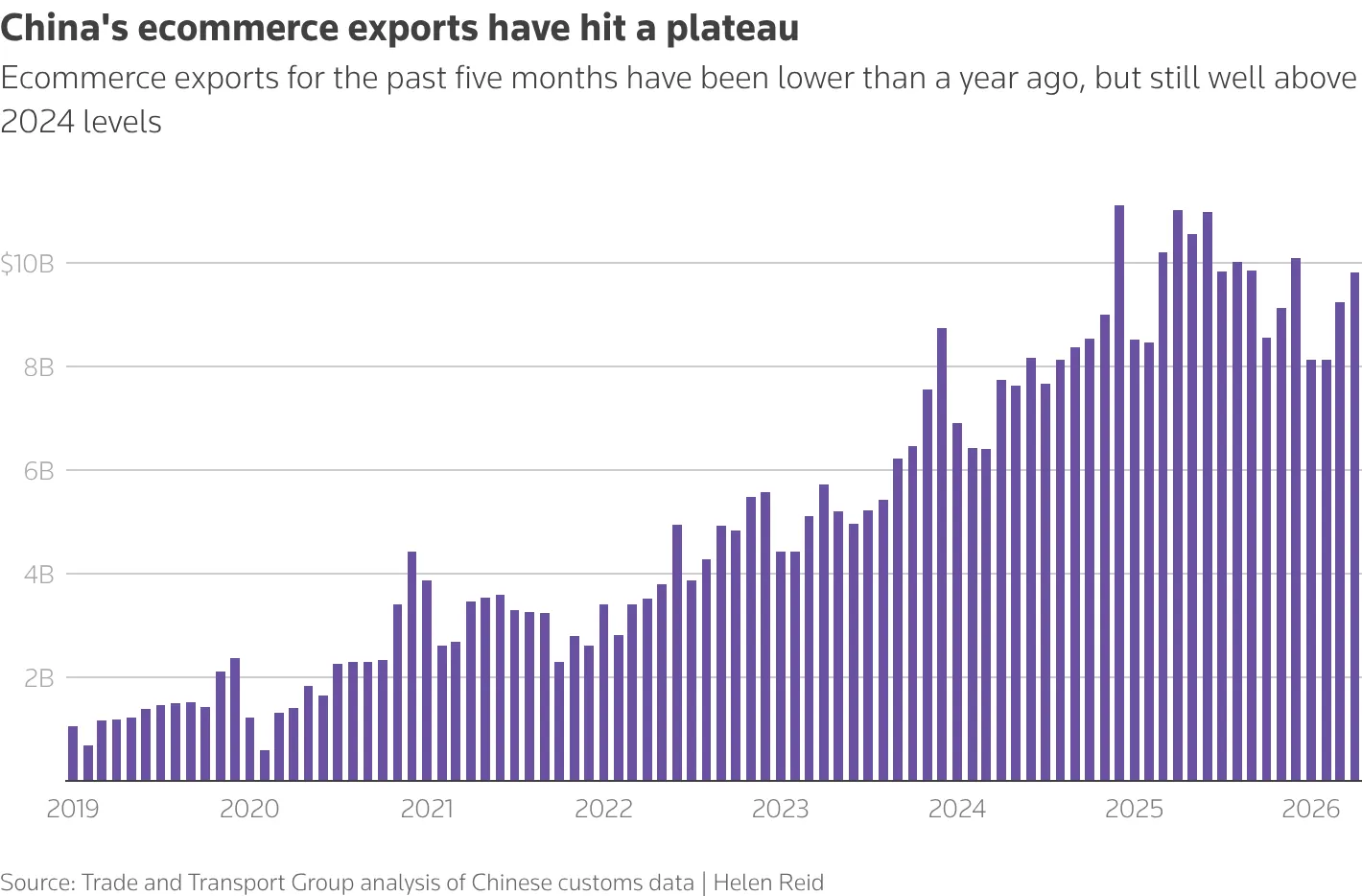
China's e-commerce sector is experiencing a downturn, with export sales plummeting by 10.9% in April for low-cost retailers like Temu and Shein.
China's e-commerce export momentum is stalling due to skyrocketing jet fuel prices and dwindling demand from low-income Western consumers, who are hesitant to spend amid the ongoing Iran conflict's economic ripple effects on big online players like Temu and Shein.
Related ↗British companies halt recruitment amid Iran conflict impact, REC research indicates.Chinese e-commerce expansion efforts are experiencing a substantial deceleration due to strained business models that relied heavily on importing $5 garments from local factories to international customers.
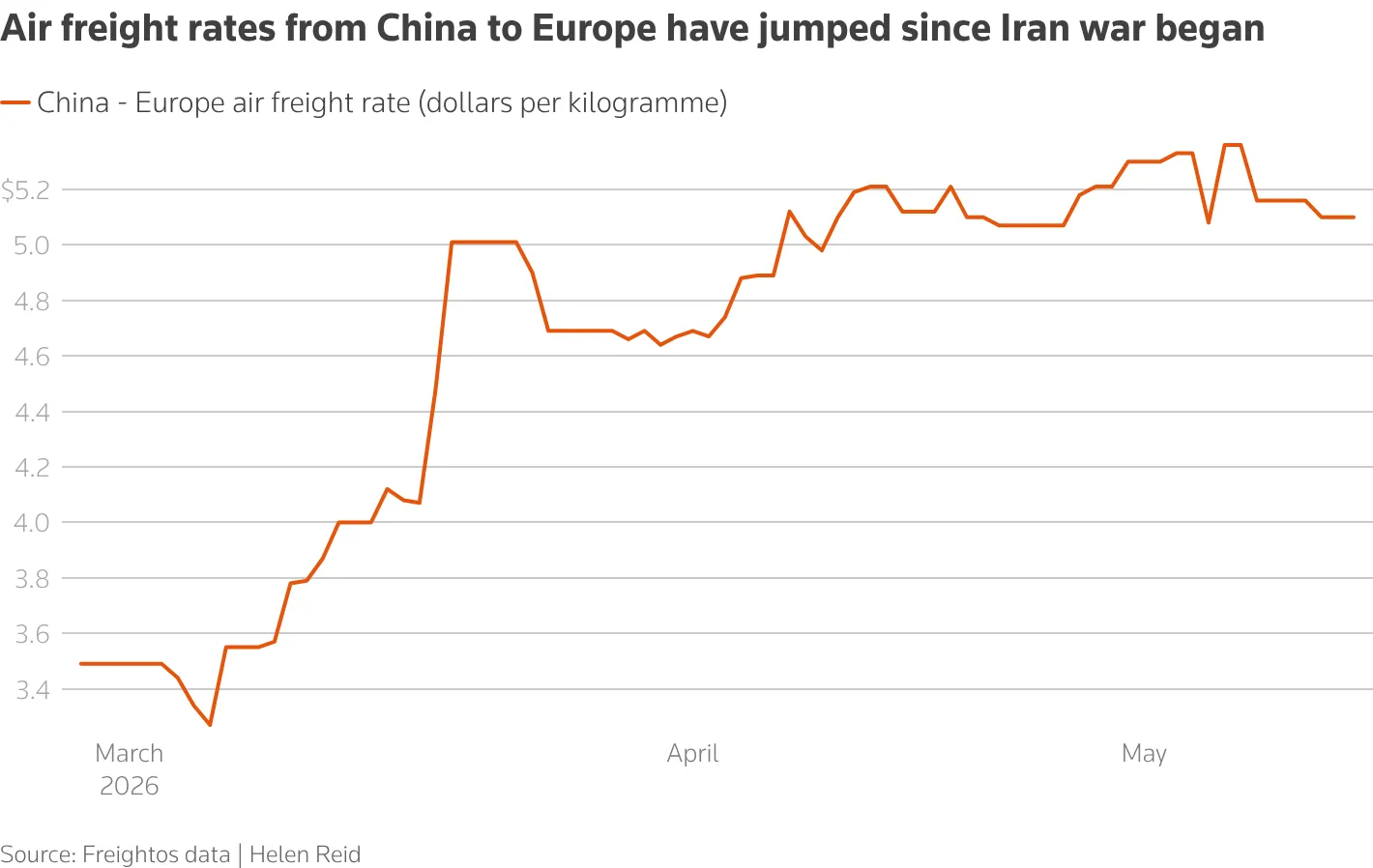
Logistics expenses have skyrocketed due to the ongoing turmoil in the Middle East, exacerbating an already challenging situation for global e-commerce expansion efforts led by China, according to industry experts and recent statistics.
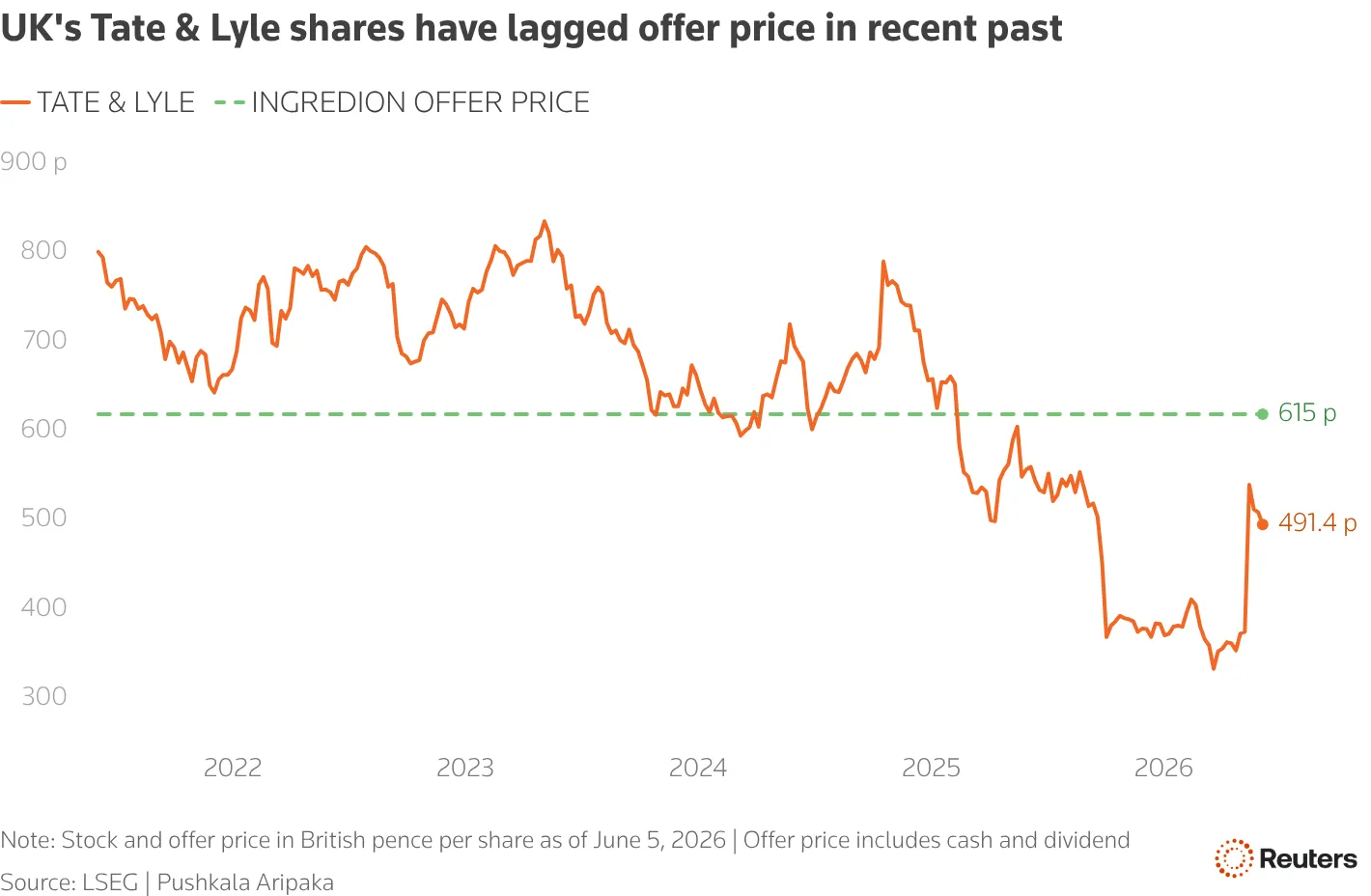
Read next ↗Tate & Lyle accepts a £2.7 billion all-cash acquisition from Ingredion.China's e-commerce export growth has stalled for five straight months, with April seeing a notable 10.9% drop in sales to $9.81 billion. This decline is attributed to a slowdown in global expansion efforts, as analyzed through Chinese customs data by the Luxembourg-based Trade and Transport Group.
05China's E-commerce Costs Shifted Upward.
Shenzhen-based seller Diana Qiao has adjusted her pricing upwards, attributing the change to a significant hike in shipping costs, which now amount to an additional dollar per item.
Consumers are shouldering the increased costs of e-commerce in China, according to Qiao, who cites rising expenses as necessary for maintaining her profit margins despite a minor dip in sales.
Analysts warn that plummeting export values signal a significant shift in China's e-commerce landscape, potentially marking the end of an era for budget-friendly online retailers.
Frederic Horst, managing director of the Trade and Transport Group, notes a shift towards consolidating shipments in bulk within local warehouses for domestic dispatch.
The air freight expense becomes disproportionately high when compared to the item's worth, especially for heavier products like tops weighing between 300 and 400 grams. In such cases, air freight accounts for approximately 60% of the overall cost.
In recent weeks, Shein has significantly increased its European logistics capabilities by opening a new facility in Cannock, UK.
Alibaba, owner of AliExpress, confirms its commitment to offering affordable prices and a secure marketplace for buyers and sellers amidst escalating global shipping expenses.
Neither Shein nor Temu provided comment on how rising air freight expenses are impacting their operations.
15E-commerce platforms see demand wane gradually.
Exports have indeed surpassed their levels from two years prior, with a notable surge in shipments at the beginning of 2025 preceding U.S. tariff implementation.
Growth momentum from recent years will be challenging for e-commerce platforms as Shein and Temu have already made significant strides in market share, while rising petrol costs are straining household finances in the U.S. and Europe. The European Union's introduction of a €3 fee on low-value parcels is set to take effect on July 1.
A China-based freight forwarder notes that air freight costs are just one factor affecting e-commerce platforms, which are currently experiencing slower growth due to declining overseas consumption caused by rising inflation.
Freightos' head of research, Judah Levine, notes that air freight rates may persist at elevated levels due to ongoing jet fuel price concerns. This trend could continue even if tensions surrounding the Iran conflict ease over time.
Companies may opt for alternative transportation methods or delay shipments if costs remain excessively high or escalate further, according to Martin Habisreitinger, Hellmann Worldwide Logistics' chief operating officer of airfreight.