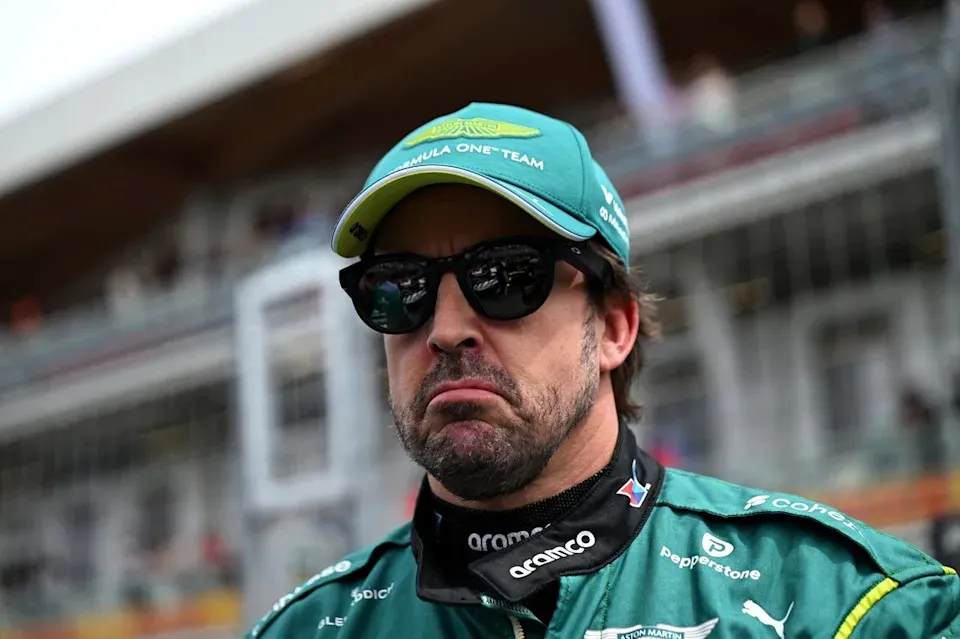
Aston Martin's Fernando Alonso voiced a resolute opinion on hybrid engines in Canada, suggesting that their introduction has stripped F1 of "pure racing" for nearly a decade, leaving the validity of his assertion open to scrutiny.
Fernando Alonso has consistently expressed his opinions about the 2026 regulations since the season began. During pre-season testing in Bahrain, he noted that cars relying too heavily on energy recovery systems minimize risk, particularly when navigating corners – a scenario where drivers should ideally have room for error and skillful maneuvering.
Related ↗Red Bull's F1 engine performance leaves ADUO stunned.Fernando Alonso's stance on F1's hybrid power unit remains unchanged ahead of the Canadian Grand Prix. The sport is considering a shift away from the current near-50:50 internal combustion engine-electric power split, with a view to reverting to a more classic 60/40 balance by 2027. However this potential change hangs in the balance due to ongoing manufacturer discussions and the possibility of delays until at least 2028.
Read Also
Read next ↗Dutch cyclist Demi Vollering triumphs in the women's Giro d'Italia, completing a rare feat.Formula One is considering shorter race formats to accommodate.
Fernando Alonso is adamant that F1 needs to take a more drastic approach, reinforcing his criticism of the current engine regulations. He argues that even a rule revision in 2027 would only provide temporary relief, as the following season would still be characterized by a sense of limbo until the next major technical overhaul in 2031. For Alonso, what's most significant is that the hybrid power unit has effectively robbed F1 of authentic racing for nearly a decade.
Fernando Alonso believes the F1 hybrid power unit's introduction marked a departure from "pure racing." According to him, the shift towards electrification was seen as a step into the future, but it doesn't apply to motorsport. Racing is a unique entity that requires a different approach. The current scenario sees a return to a 60-40 balance, which will gradually decrease in the future. A lost decade of authentic racing began with the turbo era in 2014 and has continued since then.
Fernando Alonso suggests a significant loss of pure racing authenticity in recent years.
The introduction of hybrid power units in F1 had an underwhelming start, both during the previous technical cycle and the current one. The 2014 season was marked by significant reliability concerns stemming from the complex new hardware, which presented a major challenge for teams and drivers to navigate.
Introducing a revolutionary new technology was bound to have its teething problems. Yet with time and refinement, these hybrid units proved themselves to be remarkably reliable, consistently setting new records in their wake. The pursuit of innovation is an inherent aspect of Formula 1's evolution, but Alonso's argument centers on the impact of electric power on the fundamental nature of racing itself.
Car weight has become a pressing concern. The introduction of new chassis safety measures is partly responsible for this increase, but the addition of electric motors and batteries is the primary culprit. This added mass compromises agility, a crucial aspect that drivers like Fernando Alonso have long advocated echoing their preferences from two decades past when cars were lighter and more responsive.
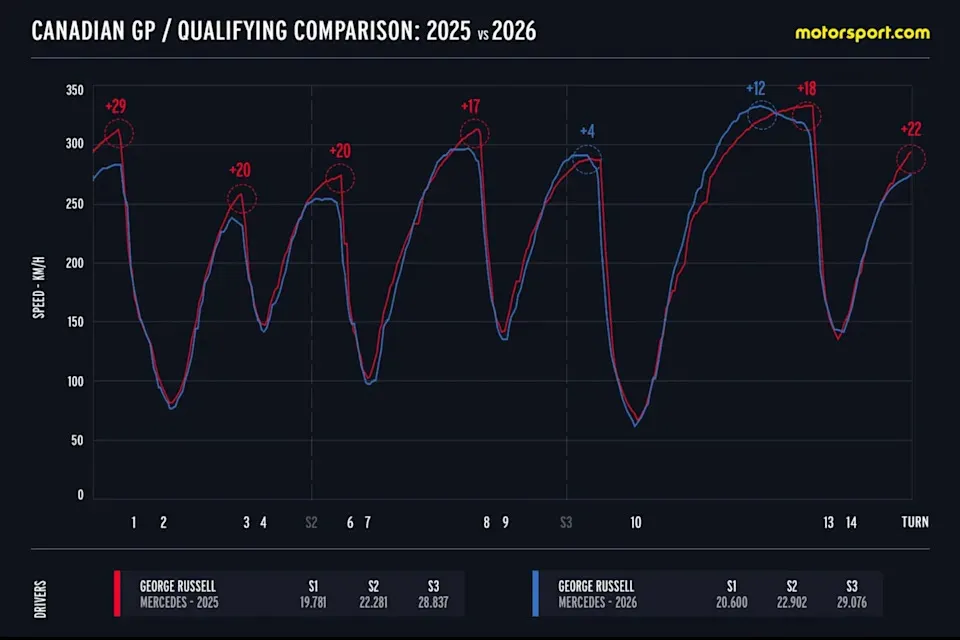
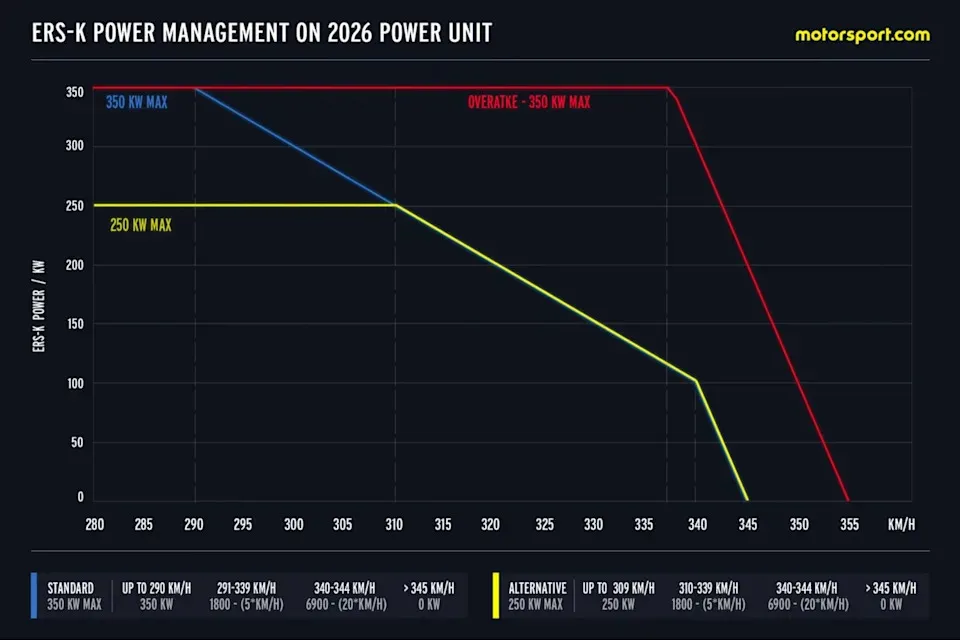
Anyone who lived through that era naturally remembers those cars fondly, with a degree of nostalgia. But there is another point: if electric power is not used simply as a KERS system but as an integral part of the powertrain – as it was through the end of 2025 and will continue to be in the new technical cycle – certain limitations arise. One of them is derating, the reduction in speed at the end of a straight when electrical energy runs out.
The reduced speed under old rules was less apparent due to the MGU-K's lower power output, allowing for more efficient energy distribution on lengthy straightaways. Meanwhile, the MGU-H provided an unseen yet significant boost.
Teams occasionally found themselves unable to start a lap with a fully charged battery, typically stopping at around 90% capacity. To compensate, they would strategically plan their laps to recharge before attempting an overtake, which was crucial for maximizing the approximately 160 additional horsepower generated by the MGU-K during high-speed maneuvers.
Formula One underwent significant changes, departing from the familiar racing experience, yet the initial hybrid era's constraints were surprisingly contained.
McLaren's Oscar Piastri noted that even with older power units, a significant disparity existed between circuits, with some experiencing limited engine deployment, typically around an 80-20 or 85-15 split.
The hybrid power unit introduced in F1 has created an uneven playing field for drivers. At many tracks, teams were able to perform well, but sustaining maximum electrical power on straights remains a challenge. Regardless of the engine split implemented, drivers face difficulties in qualifying laps due to battery management issues and finding the optimal level of charge.
Achieving optimal battery levels is an intricate challenge. Either begin the lap with partially depleted batteries or forgo turbo boost, leaving little room for compromise. The only viable alternative lies in modifying the underlying components, highlighting the trade-offs inherent in hybrid power unit implementation.
When compromises are made, the line between supporting innovation and becoming overly reliant on it can blur. The current F1 regulations have only served to highlight this delicate balance in recent years.
The incorporation of a potent electric component, coupled with the elimination of the MGU-H and minimal adjustments to battery capacity, reveals inherent trade-offs within the hybrid power unit's design.
Speed reductions are evident on specific circuits due to hybrid power unit constraints, requiring drivers to be meticulous with throttle management, particularly during qualifying sessions, although recent adjustments made in Miami have somewhat alleviated these problems.
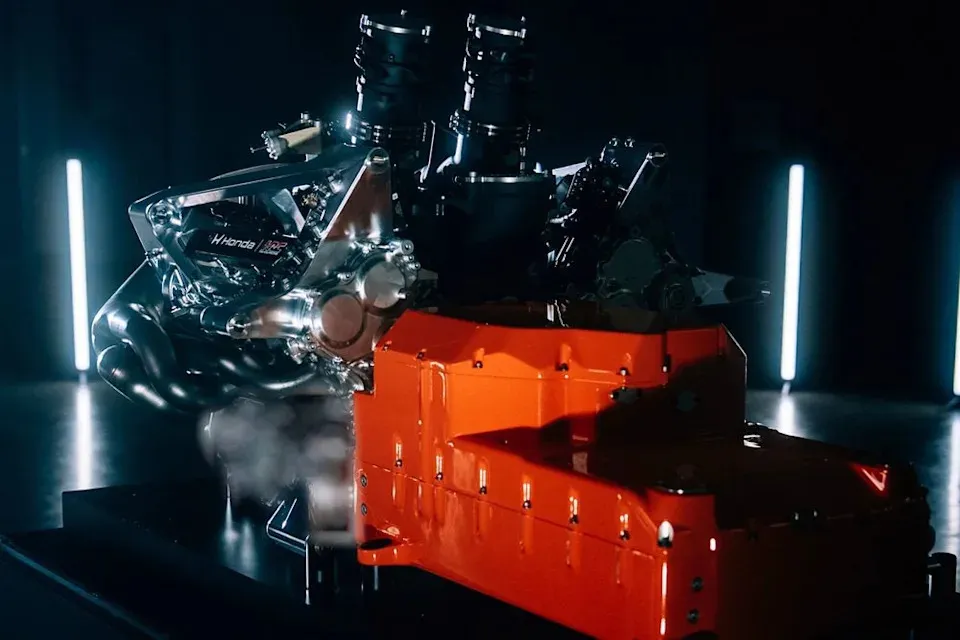
›Hybrid engines sparked intense debate among Formula One drivers.
Formula E's design reflects a deliberate focus on electric power, acknowledging its inherent limitations and allowing for distinct driving approaches to emerge naturally within the series' framework.
Achieving harmony with hybrid engines proves elusive, particularly within the framework of existing rules, which inherently involve trade-offs. The debate over reverting to a 60/40 ratio by 2027 or 2028 has become a central point of discussion among Formula One drivers.
The effectiveness of hybrid technology in racing isn't necessarily a question of its inherent flaws, but rather how it's implemented within existing technical constraints. A well-designed hybrid system should complement the engine, not become its sole reliance.
While some drivers strongly support Alonso's stance, others like Carlos Sainz take a more moderate approach, viewing the 2025 power units as a suitable conclusion without compromising the excitement of Formula 1 racing.
Formula One drivers are divided over hybrid engines, with Carlos Sainz expressing his dissatisfaction: "We're never satisfied," he stated bluntly. For him and many others, the ideal setup would combine electric assistance as an enhancement, not a replacement for traditional power sources.
Formula One drivers have long debated the merits of hybrid engines. Some view them as an improvement over traditional power units, while others see them as an unnecessary addition. Drivers who prefer a more straightforward approach to engine design may feel that hybrids are too complex, even if they provide a performance boost. For many, including some journalists, a 60-40 split between electric and internal combustion is still not ideal, but it's a compromise until real racing engines return in 2030.
Hybrid power units have been a contentious issue among F1
McLaren marks a milestone at the Monaco Grand Prix circuit.
Mercedes' innovative diffuser has been a topic of discussion among Formula One drivers recently.
For comprehensive motorsports coverage, go to our official site.
For comprehensive motorsports coverage, goto our officialsite.