The World Meteorological Organization forecasts a robust El Nino event for this year's cycle. The combined effect of El Nino and climate change may push global temperatures to an all-time high in 2027.
Forecasters are warning of a powerful El Nino event unfolding, with potentially catastrophic consequences for global weather patterns by year's end, according to the World Meteorological Organization's latest update. Climate scientists agree that this phenomenon will be exacerbated by ongoing climate change.
Related ↗British companies halt recruitment amid Iran conflict impact, REC research indicates.A strong El Nino event is predicted to emerge between June and August, with a high probability of persisting through November, according to the World Meteorological Organization's latest forecast, which carries an 80% confidence level for development and a 90% chance of extended duration.
El Nino's reappearance is predicted approximately every two to seven years, triggered by a decline in trade winds that allows warmer waters to accumulate in the eastern Pacific Ocean. This phenomenon leads to increased global temperatures and irregular rainfall patterns, causing droughts in some areas while others experience excessive rain. Its effects also extend to hurricane formation.
Read next ↗Tate & Lyle accepts a £2.7 billion all-cash acquisition from Ingredion.This year's outlook is especially dire due to two key factors.
This year's El Nino has a heightened likelihood of surpassing average intensity in its effects on the environment.
Uncertainty remains as some climate models predict a "strong" El Nino event, while others indicate otherwise. WMO predictions hint at a possible strong El Nino occurrence, characterized by elevated sea surface temperatures in the eastern Pacific exceeding 1.5 degrees Celsius (2.7 degrees Fahrenheit) above average.
Climate change is a major contributing factor now.
Rising greenhouse gas emissions are now driving a global temperature increase of approximately 1.3 degrees Celsius.
El Nino's amplified influence heightens the severity of extreme weather events, such as scorching heatwaves, severe droughts, torrential rains, and devastating bushfires, which often lead to catastrophic consequences like floods and crop devastation.
Climate change amplifies the effects of El Nino events, making them more severe and far-reaching in their consequences, according to Piers Forster, a leading expert on physical climate change at the University of Leeds.
Climate change is amplifying the destructive potential of El Nino, prompting the World Meteorological Organization to issue a warning about 2027 potentially becoming the hottest recorded year on file. The previous benchmark year for El Nino activity was 2024, which was deemed extremely powerful by the WMO.


15Devastating consequences loom large.
The distinct characteristics of each El Nino event pose a significant challenge in forecasting its global impact accurately.
Regions prone to increased rainfall during El Niño events are often found in southern South America and parts of Central Asia, whereas Central America and Australia tend to experience drought conditions. Heatwaves are exacerbated by this phenomenon, affecting areas beyond the immediate Pacific region, including Europe itself.
Disastrous outcomes threaten food cultivation, industrial operations, and human existence severely already.
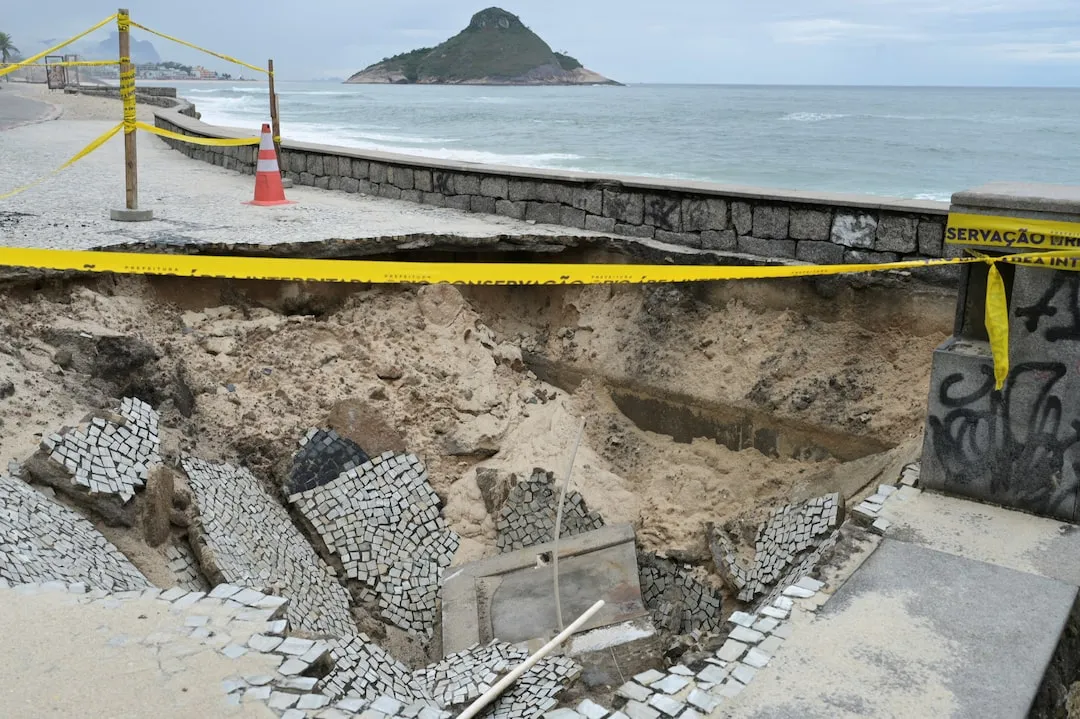
The devastating impact of the 2024 Rio Grande do Sul floods in Brazil was felt intensely from April to May, resulting in over 180 fatalities and displacing a staggering 600,000 individuals. Climate change and El Niño's influence exacerbated the torrential downpours that led to this catastrophe.
University of Rio Grande do Sul's climate centre director Francisco Aquino warns that an intense El Nino event could lead to catastrophic outcomes in 2023.
Aquino cautioned that combining a severe El Nino with existing climate change effects would have catastrophic outcomes. The likelihood of such a scenario is heightened by the ongoing warming trend, which also contributes to increasing sea temperatures.
El Niño's effects are being exacerbated by climate change in southern Africa, where it typically disrupts rainfall patterns during the wettest months, severely impacting hydroelectric power output and agricultural productivity.
Prolonged droughts resulting from below-normal rainfall will become even more severe due to climate change, posing significant threats to agricultural productivity, particularly for rain-fed farmers in the area, according to Izidine Pinto of the Netherlands Meteorological Institute's Climate Research team.
Italy's climate change expert Antonio Navarra warns that intensifying Pacific cyclones pose a significant threat to global governance.
Warmer Pacific waters are expected to create a highly conducive atmosphere for tropical cyclone development. The impending El Niño event will inject a massive amount of energy into this environment, resulting in intensified weather systems overall.
El Nino's predicted impact this year may serve as a harbinger for the extreme weather patterns that are expected to become commonplace within approximately five years, regardless of any future El Nino occurrences.
Forster's statement offers a glimpse of impending repercussions.
El Nino's influence on atmospheric circulation is noteworthy, according to Theodore Keeping, Research Associate at Imperial College London, who points out that its effects on weather patterns differ significantly from those of a warming climate in isolation.
Weather patterns similar to those typically associated with a neutral El Niño year can now be observed, even in areas usually experiencing milder climates.