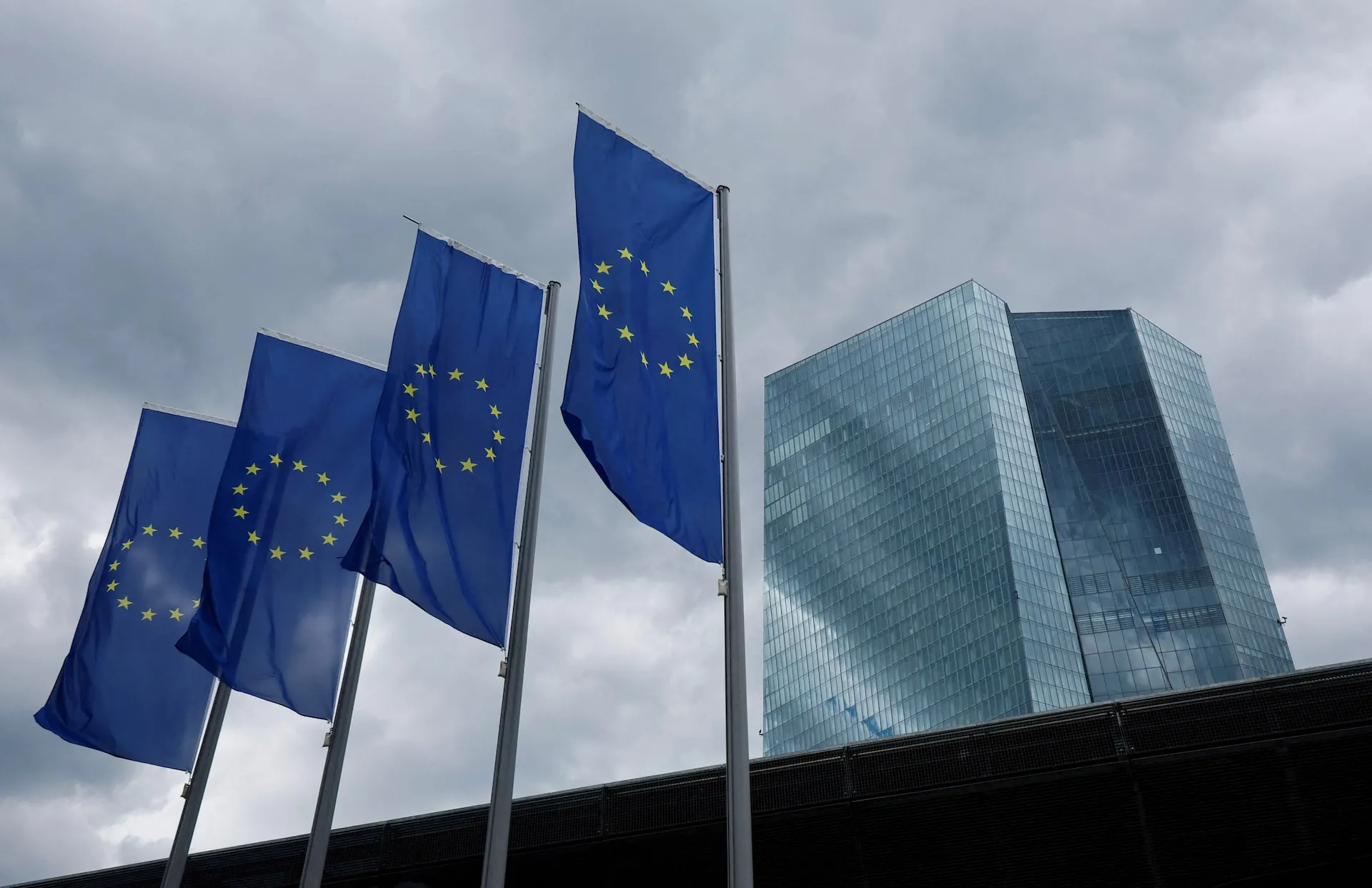
Economists are unanimous in their prediction that the European Central Bank will soon hike its deposit rate to 2.25% on June 11, with a second rise anticipated for September, amidst a delicate balancing act between inflation and economic decline.
May's inflation rate soared to 3.2%, significantly exceeding the ECB's desired benchmark of 2.0%. Meanwhile, a more concerning trend emerged with core inflation surging to 2.5%, indicating that the effects of the Iran conflict are being felt in rising costs.
Related ↗IDR survey reveals UK pay settlements remain steady at 3.5% for a second consecutive month.Indicators such as PMI surveys and official statistics suggest an economic slowdown is underway. The prolonged conflict, now exceeding three months without resolution, threatens to exacerbate the situation further, particularly with the Strait of Hormuz still severely congested.
Policymakers are almost unanimous in their expectation of a rate increase in June, with even a peace agreement failing to alter the course. Economists caution that an already sluggish economy and elevated interest rates from last year's inflation peak weigh against further tightening measures.
Read next ↗Gulf region stock markets decline sharply today suddenly.A recent survey reveals that nearly all economists polled between May 29 and June 3 anticipated a 25-basis-point rate hike for the upcoming week, with 90% of respondents predicting this outcome.
Economists warn that making the same inflation mistake twice would be a costly error for the ECB. According to Bas van Geffen, holding rates steady risks damaging credibility as an effective inflation fighter, possibly more so than raising them now.
Economists currently anticipate a limited number of rate increases, but prolonged circumstances might necessitate more drastic action from the European Central Bank.
A significant majority, 60%, of economists polled anticipate a single further interest rate hike this year, scheduled for September, echoing market expectations that have been building steadily. The previous month's survey revealed no clear direction for rates by the end of 2026.
About 30% of economists predicted either zero or minimal interest rate increases.
Moving interest rates into the upper echelons of the neutral range would effectively counter potential inflationary pressures gathering momentum. According to Dean Turner, chief euro zone and UK economist at UBS Global Wealth Management, this adjustment is now a necessary step.
The ECB's decision to raise interest rates in June isn't intended to intentionally throttle economic growth, but rather mitigate potential risks and consequences.
Inflationary pressures are driving economists' predictions. Brent crude futures have surged by approximately 40%, placing upward pressure on inflation expectations. Forecasters now anticipate an average annual rate of 3.3% for the remainder of this year, with a slight dip to 2.9% in 2026, according to recent polls.
Economists anticipate a modest growth of 0.7% for next year, marking the third downward revision since early March and a record low since 2023 projections.
Economists overwhelmingly agree that a June rate hike by the ECB is now an inevitability. Two-thirds of respondents pointed to stagflation as a looming threat, characterized by stagnant growth, high joblessness, and inflationary pressures reaching unsustainable levels. This stark assessment diverges from Christine Lagarde's earlier assertion that the term "stagflation" applies only to the 1970s economic climate.
Economists are convinced that the ECB's rate hike in June is now an inevitability due to impending stagnation over the next few quarters, which will be exacerbated by rising energy costs across the euro zone.
Results from a recent global economic survey indicate strong consensus.
Inflation inflation rate soared to 3.2%, significantly exceeding the ECB's desired benchmark of 2.0%. Meanwhile, a more concerning trend emerged with core inflation surging to 2.5%, indicating that the effects of the Iran conflict are being felt in rising costs.