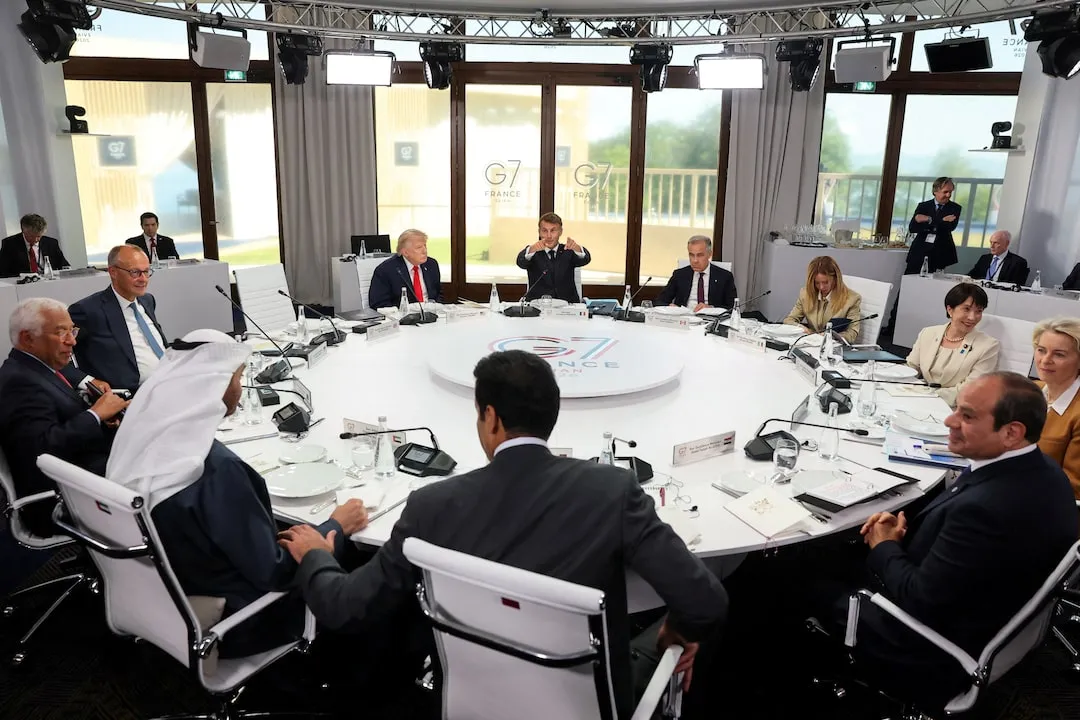
The G7 leaders' joint declaration underscores Ukraine's increasing influence in global affairs. The summit's closing session focuses on a crucial aspect: strategic mineral resources.
The G7 nations issued a joint declaration on Wednesday, reaffirming their commitment to upholding Ukraine's sovereignty and territorial boundaries. This stance was accompanied by an agreement to intensify economic penalties against Russia.
Related ↗US President Trump condemns Israeli actions in Lebanon as deadly to non-combatants.The G7 nations' collective stance on the June 15-17 summit in Evian-les-Bains stood out for its cohesion, a notable departure from previous instances where U.S. President Donald Trump's administration has been hesitant to align with others, especially when it comes to resolving the complex conflict in Ukraine.
Following the positive tone of his encounter with Ukrainian President Volodymyr Zelenskiy and other G7 leaders on Tuesday, there's growing hope for a potential peace agreement. A meeting between Zelenskiy and Trump is now scheduled for Wednesday.
Read next ↗Details of the US-Iran ceasefire agreement will likely be disclosed shortly.Ukraine's recent military gains have significantly boosted its bargaining power, outmaneuvering Russian defenses effectively.
G7 leaders expressed enthusiasm for the US-Iran peace agreement, signed by Trump just before the summit, and indicated a willingness to assist in its execution as part of their collective stance on global issues.
The G7 nations pledged to bolster Ukraine's energy security by exploring alternative import channels, particularly outside the Strait of Hormuz.
As part of its G7 presidency, France is now focusing on two key issues: critical minerals and global economic disparities.
Diplomats report that France is urging allies to endorse a joint declaration regarding crucial minerals, which may contain provisions to mitigate dependence on China and safeguard investments against retaliatory actions and unfair trade practices.
Global markets were shaken by China's actions last year as certain industries teetered on collapse following Beijing's imposition of export restrictions on rare earth permanent magnets, a move that starkly underscored the West's dependence on these critical components for energy, defense and tech applications.
Ahead of the G7 summit, a French presidency official emphasized the importance of negotiations surrounding critical minerals and their impact on economic self-determination.
Recent deliberations have centered on implementing price stabilizers, establishing market benchmarks, providing financial incentives, and securing advance commitments for key minerals sourced beyond Chinese borders. Nevertheless, any initiatives unveiled by the G7 will probably serve as an initial response.
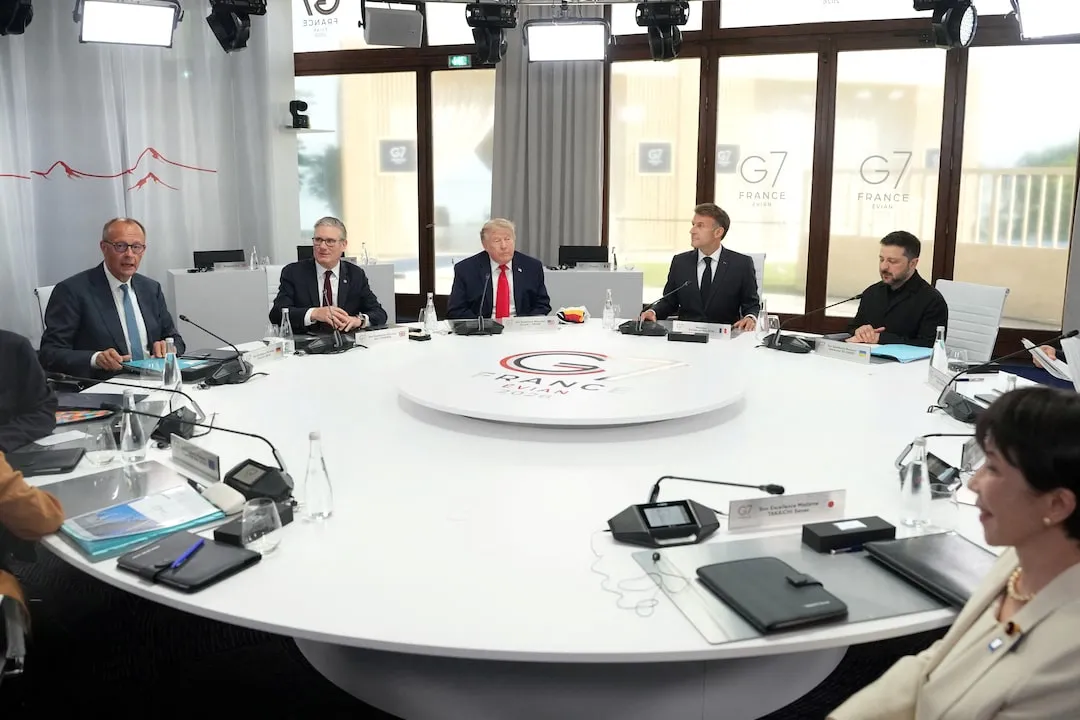
On Wednesday, in of its G7 presidency, France is now focusing on two key issues: critical minerals and global economic disparities.
14China dependency risk.
Beijing's export controls have been incrementally tightened since 2025, impacting niche materials and battery metals. This move has also restricted US firms' access to tungsten and antimony, among other commodities.
China's grip on global supply chains is being challenged by Western nations striving to establish direct connections with mining operations and expand their own processing capabilities.
A proposed US-led trading bloc for crucial minerals was floated in January 2026, but its implementation is being hindered by disagreements among nations regarding its operational framework and alignment with the "America First" policy.
18Ukraine Receives Support
G7 leaders are set to examine methods for rectifying global trade disparities, with a focus on countering unfair market practices prevalent in China. Imbalances, according to French officials, arise from an overabundance of Chinese production, excessive U.S. consumption, and insufficient European investment.
Europe is witnessing rising concern over China's substantial trade surplus and its ascension to higher-value manufacturing, echoing the term "second China shock" coined by analysts to describe this shift from low-cost production in the early 2000s.
Emmanuel Macron, France's President, made a final push for Chinese cooperation before the high-stakes summit. China has consistently refuted EU allegations of unfair subsidies, threatening robust retaliatory measures against new trade restrictions and revised technology regulations.
At their upcoming summit in Brussels on Thursday, EU leaders will engage in separate discussions about bolstering trade defense strategies against rising Chinese imports.
In 2022, the European Union reported a massive trade imbalance with China, exceeding €360 billion.
On Wednesday, G7 leaders' discussions during lunch will encompass artificial intelligence, specifically addressing the accountability of automated systems and the distinction between factual and misleading information presented by AI. Notable attendees include Sam Altman from OpenAI and Dario Amodei from Anthropic.