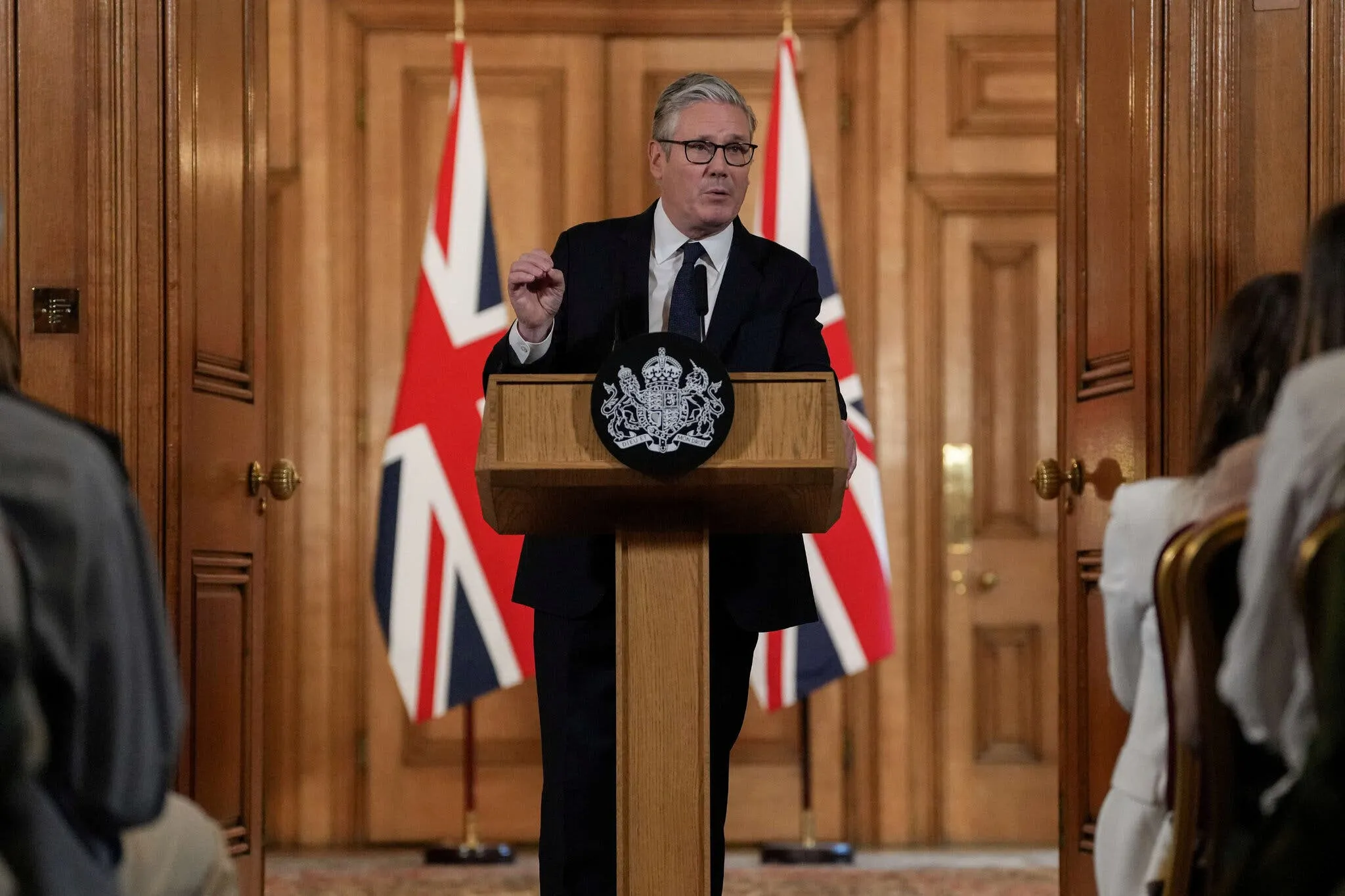
Two individuals have been found guilty of plotting to ignite fires at locations associated with the UK's Prime Minister Keir Starmer, following a recruitment through a Russian-language Telegram channel.
On Monday, two individuals received convictions for plotting to commit arson against properties and vehicles associated with UK's Prime Minister Keir Starmer, following recruitment by a Russian-language Telegram account.
Related ↗US President Trump condemns Israeli actions in Lebanon as deadly to non-combatants.Incidents of arson occurred at three properties connected to Keir Starmer within a five-day timeframe in May 2025.
Roman Lavrynovych, aged 22, confessed to following instructions from a Russian-language Telegram account masquerading as "EL Money," a Ukrainian alias. He was found guilty of two charges related to arson, with the court determining he acted recklessly regarding potential harm to human life.
Read next ↗Details of the US-Iran ceasefire agreement will likely be disclosed shortly.Stanislav Carpiuc, a 27-year-old with Romanian nationality despite being born in Ukraine, has been convicted of participating in the arson attacks. Meanwhile, Petro Pochynok, a 35-year-old Ukrainian citizen, was acquitted of conspiring to set fires.
At the trial held at Old Bailey, London's central court, Lavrynovych claimed ignorance about Keir Starmer's identity during the arson incidents. A Ukrainian construction worker and mover, he admitted to being motivated by financial gain when an unknown individual contacted him through a social media group for Ukrainians seeking employment in London in late 2024, allegedly offering extra income.
The prosecution's case highlighted Mr. Lavrynovych's prior involvement with a malicious Telegram account that orchestrated vandalism against Muslim places of worship in London, as well as the distribution of promotional materials for Direct Action U.K. in England.
Arson attacks and sabotage incidents have been linked by authorities to Russian intelligence efforts in Europe, with a notable example being a warehouse blaze in London owned by Ukrainians in March 2024.
The prosecution in Mr. Lavrynovych's case failed to provide information about the EL Money account's operator, leaving the lead prosecutor, Duncan Atkinson, to instruct the jury that determining the identity of "EL Money" was beyond their scope and not relevant to the case at hand.
Lavrynovych expressed concerns that the account's operators had intimate knowledge of his personal life, including his address and family connections, which made him feel vulnerable to their demands. He suspected multiple individuals were involved, with alternating male and female administrators.
The defense attorney, James Scobie, submitted a formal request for access to information linking the case to foreign intelligence services or state-controlled entities. However this petition was rejected by the trial judge, who ruled that jurors should only focus on what the defendants knew and believed at the time of the arson attacks.
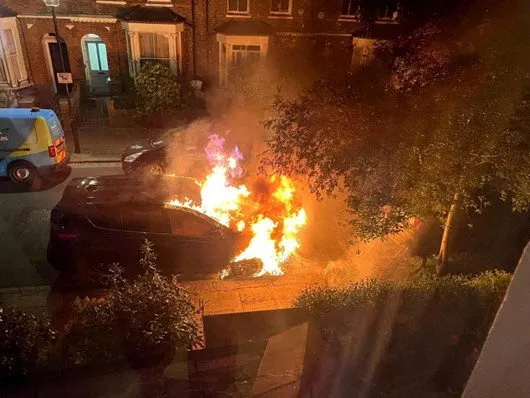
A vehicle linked to Keir Starmer suffered a blaze in London on May 8, 2025, at 3 a.m. Three days after this incident, an arson attack occurred at the entrance of a residential building managed by a company where Mr. Starmer had held senior positions.
The residence of Mr. Starmer's family in Kentish Town, previously occupied by them, suffered a deliberate fire at its entrance on May 12, preceding their relocation to the Prime Minister's official address.
Keir Starmer's townhouse remains in his ownership, coincidentally housing his sister-in-law and her family at the time of the arson attack.
Fortunately, no casualties occurred, but the blazes posed a significant threat to the residents' safety.
Court documents revealed that for every blaze, phone data indicated Mr. Lavrynovych received explicit guidance via an EL Money account, featuring specific locations, images, and details about the combustible substances used, along with instructions on concealing his identity.
Evidence revealed that individuals linked to EL Money sought confirmation of the arson incidents from Mr. Lavrynovych, with a condition that the information be made public through major UK news outlets. The group offered substantial cryptocurrency payouts, valued at thousands of pounds, but these payments remained unpaid.
Studies by the Centre for Finance and Security suggest that this incident shares many characteristics with other European cases linked to Russia. According to their research, such attacks often involve a specific set of tactics and methods.
Recruits from Ukraine have been used for arson attacks worldwide, viewed as expendable assets. Their missions often lacked clear objectives or details about the parties behind them. According to Dr. Redlowska's analysis, Russian sabotage efforts now prioritize psychological and political impact over mere physical damage, a shift in their tactics.
Moscow consistently maintains it is not involved in efforts to destabilize foreign nations.
Prosecutors revealed that after completing his last task, Lavrynovych received a cryptic message from EL Money. The translated text, presented to the jury, warned him about targeting a prominent UK figure and offered financial assistance to flee the area immediately.
The suspect offered assistance to those detained by police, promising to provide financial support for a week and a replacement phone if needed.
Arrested the following morning, Mr. Lavrynovych claimed non-compliance with police instructions, as his phone was swiftly seized upon his detention by law enforcement authorities.
Counter Terrorism Policing's head, Helen Flanagan, highlighted a concerning pattern in their investigations: crimes like arson are often orchestrated by unknown individuals promoting payments via online platforms.
Those considering such actions should reconsider their intentions and reflect on the consequences of their decisions carefully now.
Journalist Lizzie Dearden provided research assistance.