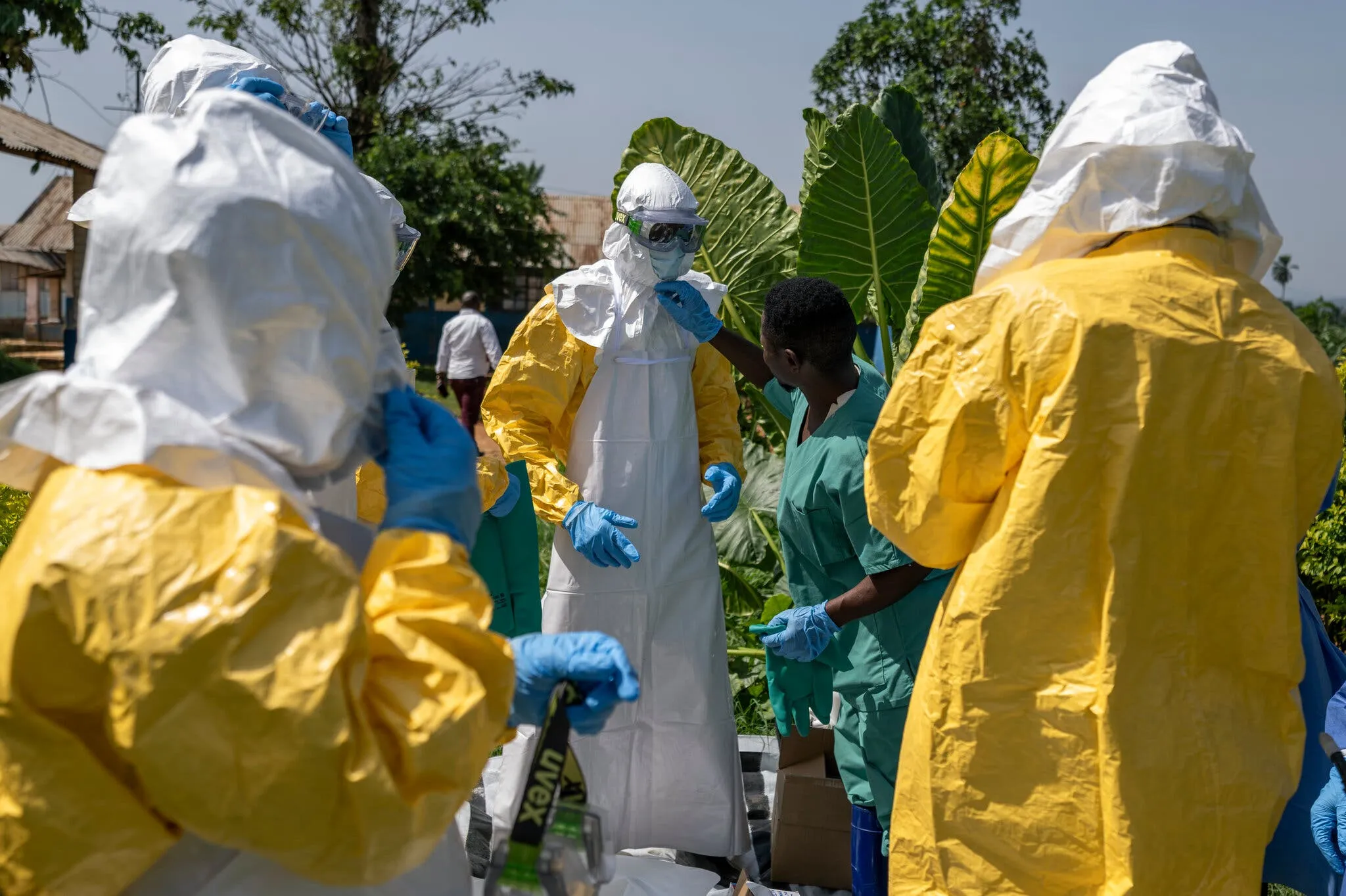
Inadequate funding for advanced diagnostic tools has hindered healthcare professionals' ability to contain outbreaks effectively.
In recent months, medical professionals in Ituri Province, northeastern Democratic Republic of Congo, began treating patients displaying classic Ebola symptoms: severe vomiting, debilitating diarrhea and life-threatening bleeding. Repeatedly, diagnostic results turned out to be inconclusive.
Related ↗Prince George set for esteemed education at Eton.Samples from patients who succumbed to illness were finally received at the National Institute of Biomedical Research in Kinshasa after an extended period. The lab then employed a distinct diagnostic tool capable of detecting various strains of Ebola and its affiliated viruses.
The true nature of the virus was revealed to be an Ebola strain distinct from the one initially detected, but it was too late: the outbreak had already spread into neighboring Uganda, escalating into a major public health crisis by then.
Read next ↗Algae infestation prompts emergency response at Reflecting Pool.Healthcare professionals are struggling to combat a deadly outbreak that has claimed at least 49 lives and affected an additional 452 individuals due to inadequate diagnostic tools. The scarcity of high-quality testing equipment hinders their efforts, particularly in areas where marginalized communities are disproportionately affected by emerging pathogens.
Dr. Mamadou Kaba Barry, head of mission in Congo for Alliance for International Medical Action, recalled their initial focus on the Zaire strain, only to find that the Bundibugyo species was causing widespread devastation. As a seasoned physician familiar with multiple Ebola outbreaks in the region, he acknowledged the uncertainty faced by his colleagues when confronted with negative test results despite their dire observations.
Alerts had been issued, prompting sample collection and subsequent testing on the Zaire strain, a crucial step in identifying Ebola cases accurately.
Public health measures such as contact tracing are currently the most effective means of controlling Ebola outbreaks, given the absence of a vaccine or proven treatment. To effectively contain an outbreak, healthcare professionals must have access to rapid and accurate diagnostic testing, enabling them to identify infected individuals and isolate them from those who remain uninfected.
Individuals presenting with potential Ebola symptoms are isolated together upon arrival at a health center, despite some possibly suffering from typhoid or malaria, which can exhibit similar symptoms. This misguided approach inadvertently exposes them to the very disease they sought treatment for. Consequently, those who fall ill become hesitant to seek medical attention, thereby increasing the likelihood of further community transmission.
Carmen Pérez Casas, head of pandemic preparedness at Unitaid, emphasizes the critical need for readily available diagnostic testing in combating Ebola. The absence of rapid tests, she notes, makes confronting the disease particularly daunting. Without prompt diagnostics, work on this highly infectious condition is severely hindered, posing a significant challenge to health agencies like Unitaid.
Healthcare professionals, laboratory teams, and diagnostic experts are working at a rapid pace to address the pressing demand for Ebola testing in the Democratic Republic of Congo. According to Dr. Samuel-Roger Kamba, the country's health minister, significant progress has been made in streamlining the testing process. In Bunia, the capital of Ituri Province, he announced that delays have been eliminated, enabling all incoming samples to be promptly analyzed.
Daily testing at the lab in Bunia has increased to 150 samples, processed efficiently on four machines without any accumulated cases waiting to be analyzed.
The majority of Ebola samples are obtained from patients already receiving treatment at clinics, yet community-based contact tracing remains limited, according to the World Health Organization. To contain the outbreak, a substantial number - many hundreds - of specimens would need rapid testing within a short timeframe.
Researchers at the national laboratory in Kinshasa first pinpointed Bundibugyo as the source of the outbreak in May, employing a genetic testing technology called RADI-One to screen for all four Ebola species affecting humans and Marburg virus, another hemorrhagic fever that has triggered outbreaks in the area.
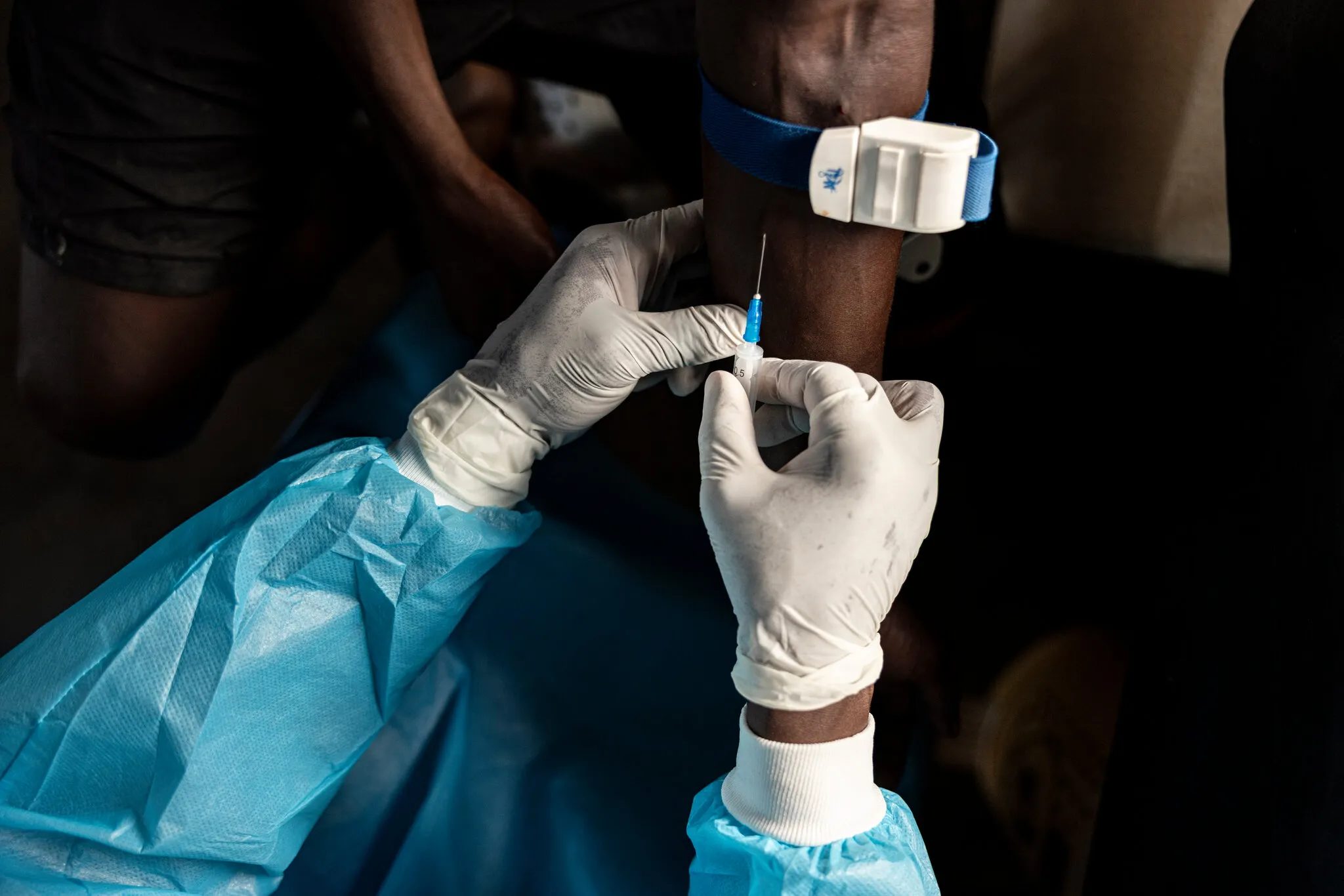
The World Health Organization is collaborating with KH Medical, the manufacturer of RADI-One, to deploy approximately twelve additional diagnostic machines in the area, according to Dr. Nicksy Gumede-Moeletsi, a medical expert from the WHO.
In the Democratic Republic of Congo, the challenge of containing Ebola is compounded by the difficulties in transporting samples to a centralized laboratory for analysis due to poor infrastructure and ongoing conflict in Ituri province.
The Democratic Republic of Congo lacks an effective rapid diagnostic tool for Ebola, unlike the at-home tests that gained widespread use during the COVID-19 outbreak. These kits would enable healthcare professionals in Ituri to swiftly identify and isolate potential Ebola patients from those without the virus, streamlining contact tracing efforts. Existing rapid tests for Ebola are designed for the Zaire species, but their accuracy is severely limited due to the virus's behavior within the human body. A significant viral load must be present before a rapid test can accurately detect infection, rendering it ineffective as a screening tool. However these tests can confirm Ebola in individuals who have succumbed to the disease.
Lack of investment in diagnostic testing development has persisted despite evident needs over several years, according to Sonjelle Shilton, a specialist with Doctors Without Borders focused on diagnostic accessibility.
The message was clear: pan-species Ebola tests were urgently needed, as they had during the previous Bundibugyo outbreak. However Ms. Shilton noted that the private sector lacks motivation to invest in research and development for a diagnostic tool primarily used in impoverished regions, mirroring the lack of vaccines or treatments available for Bundibugyo.
The RADI-One technology has seen limited deployment in Congo prior to this outbreak, whereas GeneXpert dominates globally.
GeneXpert tests, initially yielding negative results for Ebola in the ongoing outbreak, are manufactured by Cepheid, a California-based firm. This diagnostic tool was made available to laboratories through international funding, which also supported its installation during the coronavirus pandemic and for HIV and TB programs.
Congolese laboratories are currently limited to using the GeneXpert test, but it can only identify the Zaire strain responsible for major previous outbreaks.
Cepheid's diagnostic tool can identify multiple Ebola strains, including Bundibugyo, having received FDA clearance for military application in the United States.
Cepheid's chief medical officer, Dr. Connie Savor, emphasizes the company's dedication to manufacturing an initial batch of 5,000 diagnostic tests to combat the ongoing outbreak. Regulatory clearance from Congolese authorities and a recommendation from the World Health Organization are prerequisites for deploying the test in the Democratic Republic of Congo. The sluggish pace of bureaucratic approvals has hindered responses to previous outbreaks, such as the persistent mpox epidemic in the region.
The deployment timeline hinges on speed, with multiple factors at play - country-specific regulations, partner collaborations, and available resources all influencing the pace of progress within weeks or months.
Discussing the cost of these tests would be premature at this juncture, according to her statement.
KH Medical's CEO Adam Hong announced plans to boost production and bolster services in the Democratic Republic of Congo and Uganda to meet the surge in demand for RADI-One tests during the ongoing Bundibugyo outbreak.
Developing diagnostic tests for pathogens prevalent in impoverished areas is a crucial aspect of global health security, according to Mr. Hong. His company's focus on creating these diagnostics stems from the understanding that limited commercial markets don't deter their commitment to improving access to essential healthcare tools.
Journalist Declan Walsh reported from Bunia in the Democratic Republic of Congo.