The Art Workers' Coalition's struggles for a more just art industry continue to have a lasting impact on contemporary artistic endeavors.
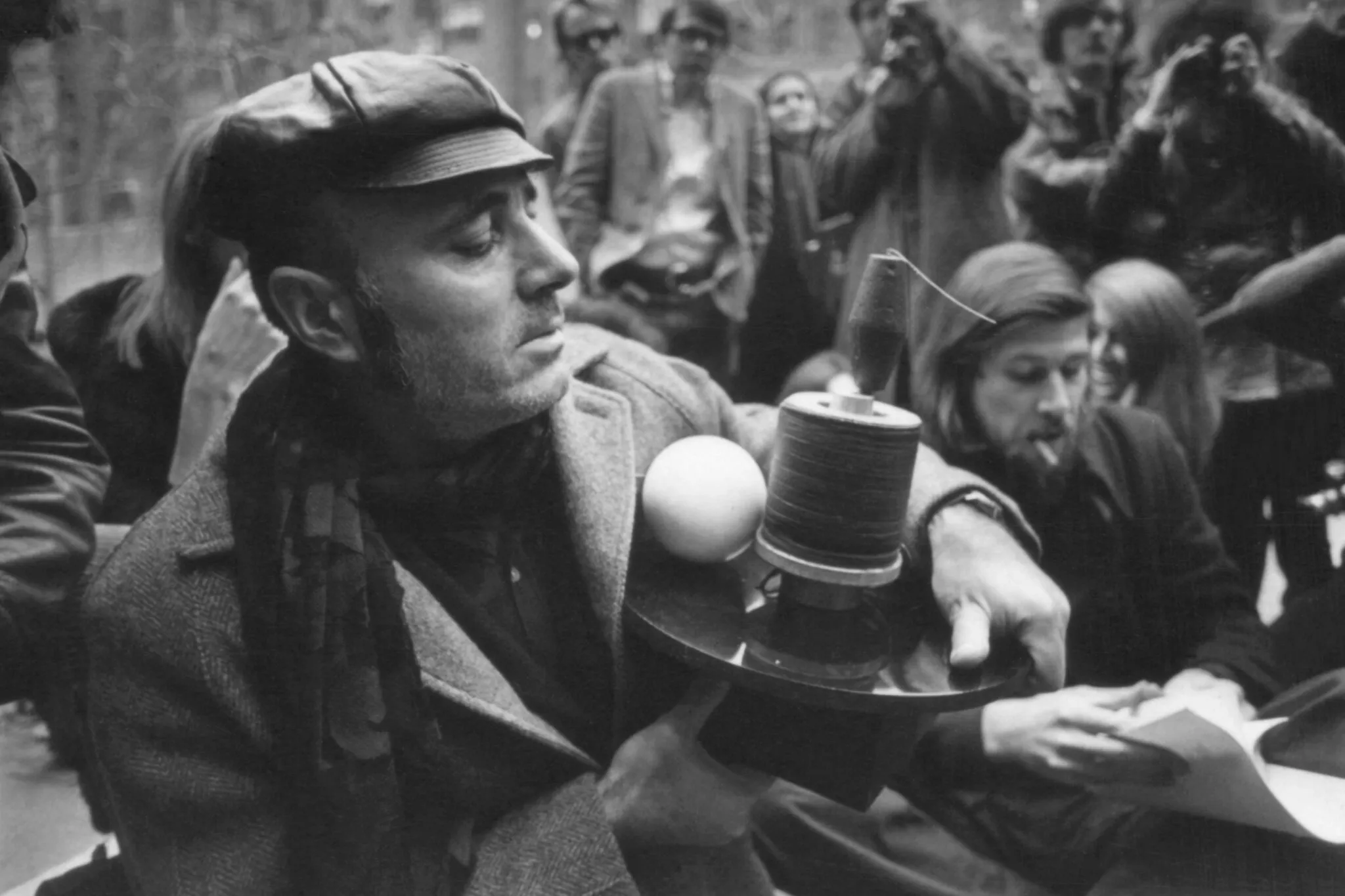
In January 1969, Takis, a Greek artist, stormed into a gallery within New York's Museum of Modern Art, seized his electromagnetic "Télésculpture" (created between 1960-62), and carried it out of the premises. The exhibition he was part "The Machine as Seen at the End of the Mechanical Age," marked a departure from the norm by featuring a video installation, a first for MoMA, but overall, it presented familiar works by Marcel Duchamp, Robert Rauschenberg, and Leonardo da Vinci, whose designs for an ornithopter flying machine were on display. Takis claimed that his contribution, a simple construction of suspended forms animated by an electromagnet, which had been part of the MoMA collection since 1962, no longer represented his artistic vision; at this point, his work was becoming increasingly baroque and technologically sophisticated (often incorporating hydrodynamics). His primary concern, however, was that "Télésculpture" was being exhibited without his consent – a common practice in those days. As Takis exited the gallery, his associates formed a circle around the sculpture, holding it hostage until the museum agreed to remove it from public view.
Related ↗John Early Understands the Futility of Millennials' Food Fixation.Takis's decision to remove "Télésculpture" from MoMA's show sparked a discussion about artists' rights within the art industry. Born in Greece during World War II, Takis had already experienced the consequences of resisting authority firsthand when he was imprisoned for his activism. This personal history likely influenced his actions at MoMA, where he sought to challenge the museum's treatment of artists. The Art Workers' Coalition, a loose collective formed by Takis and like-minded individuals, aimed to address this issue. Members included Hans Haacke and Carl Andre as artists, Lucy Lippard and Willoughby Sharp as curators, and John Perreault from the Village Voice. At that time, MoMA's consideration for artists' interests was virtually nonexistent, with property rights taking precedence over artistic expression. Takis's provocative move marked a turning point in this power dynamic, foreshadowing the coalition's utopian yet potentially doomed endeavors.
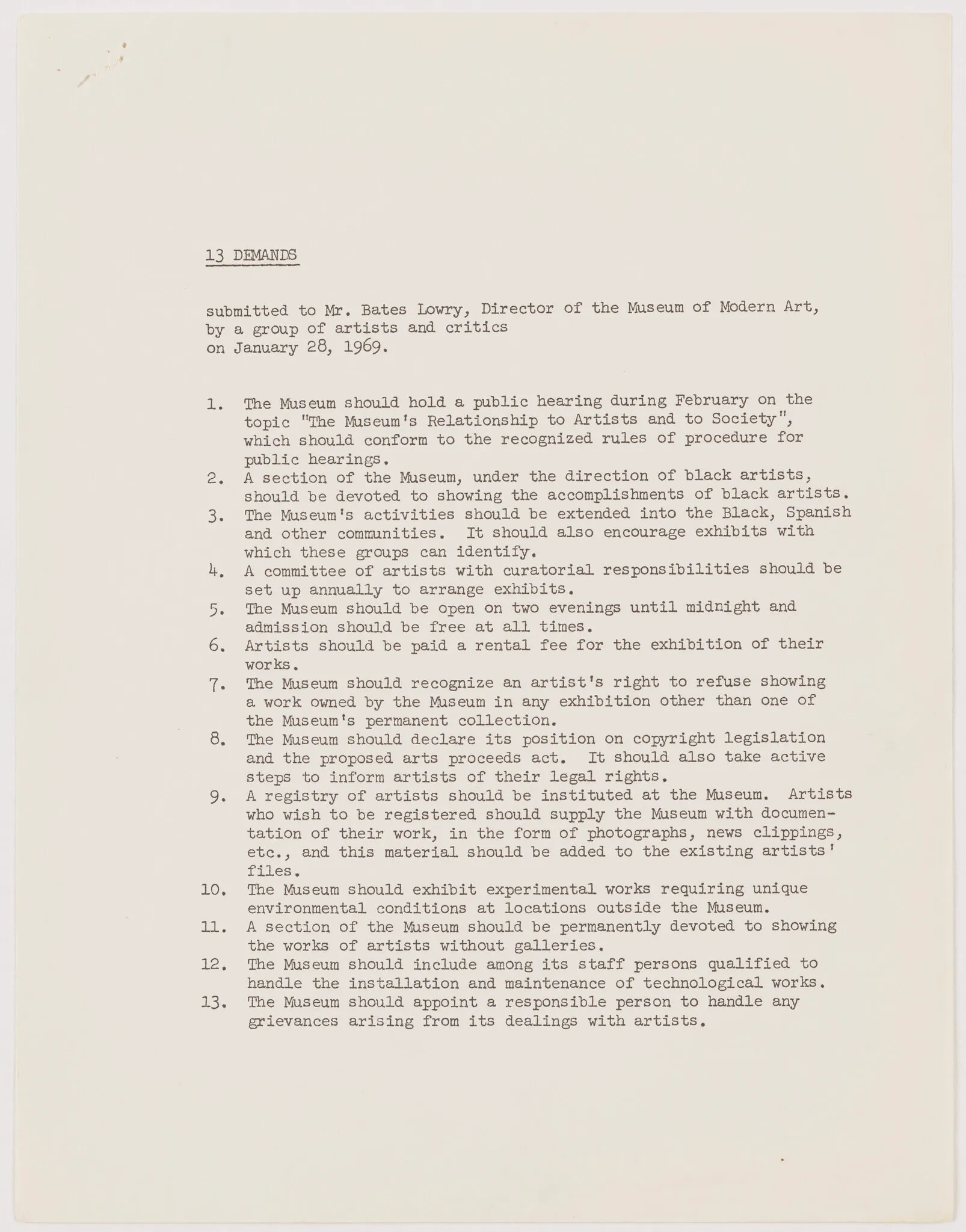
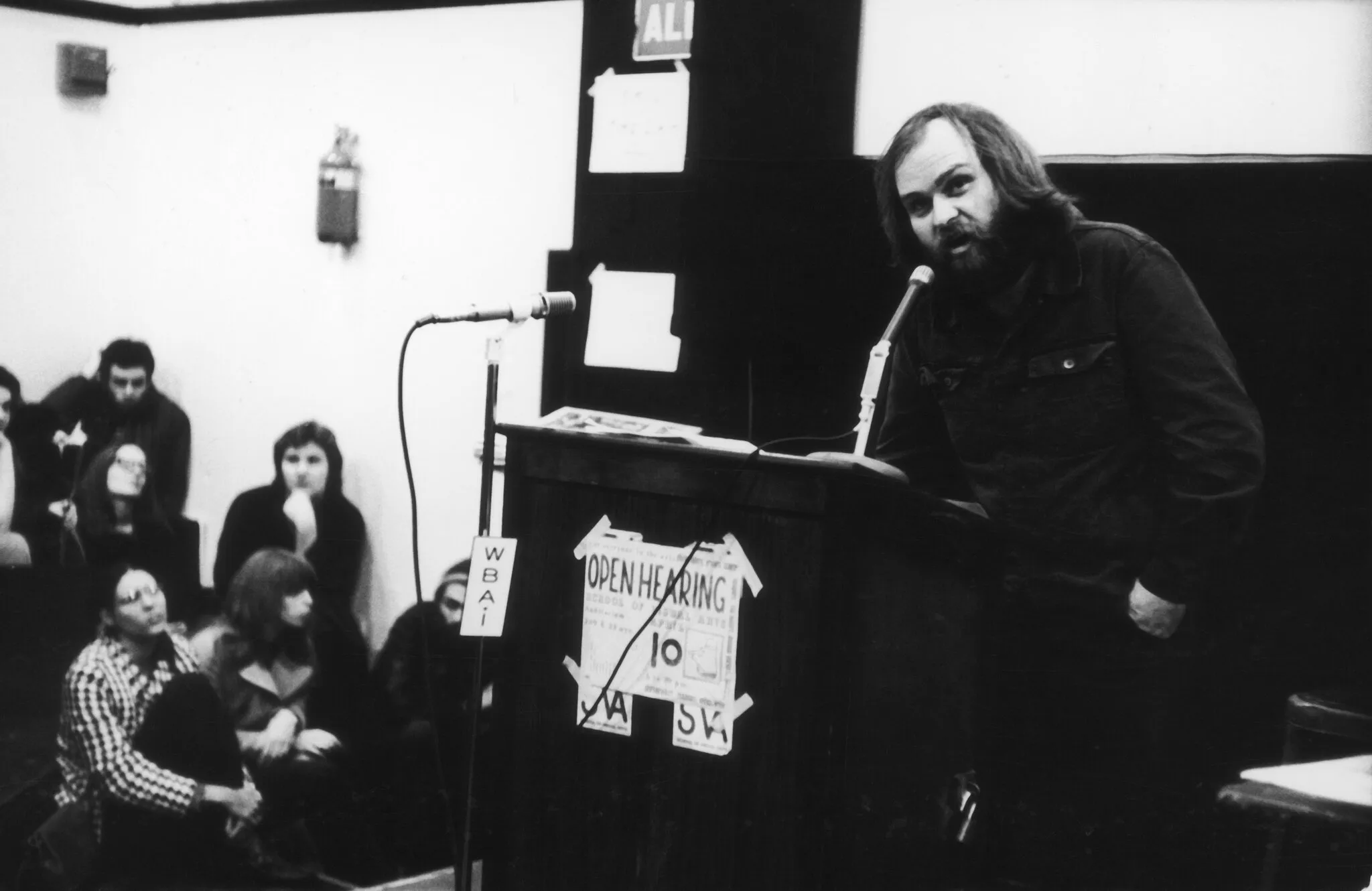
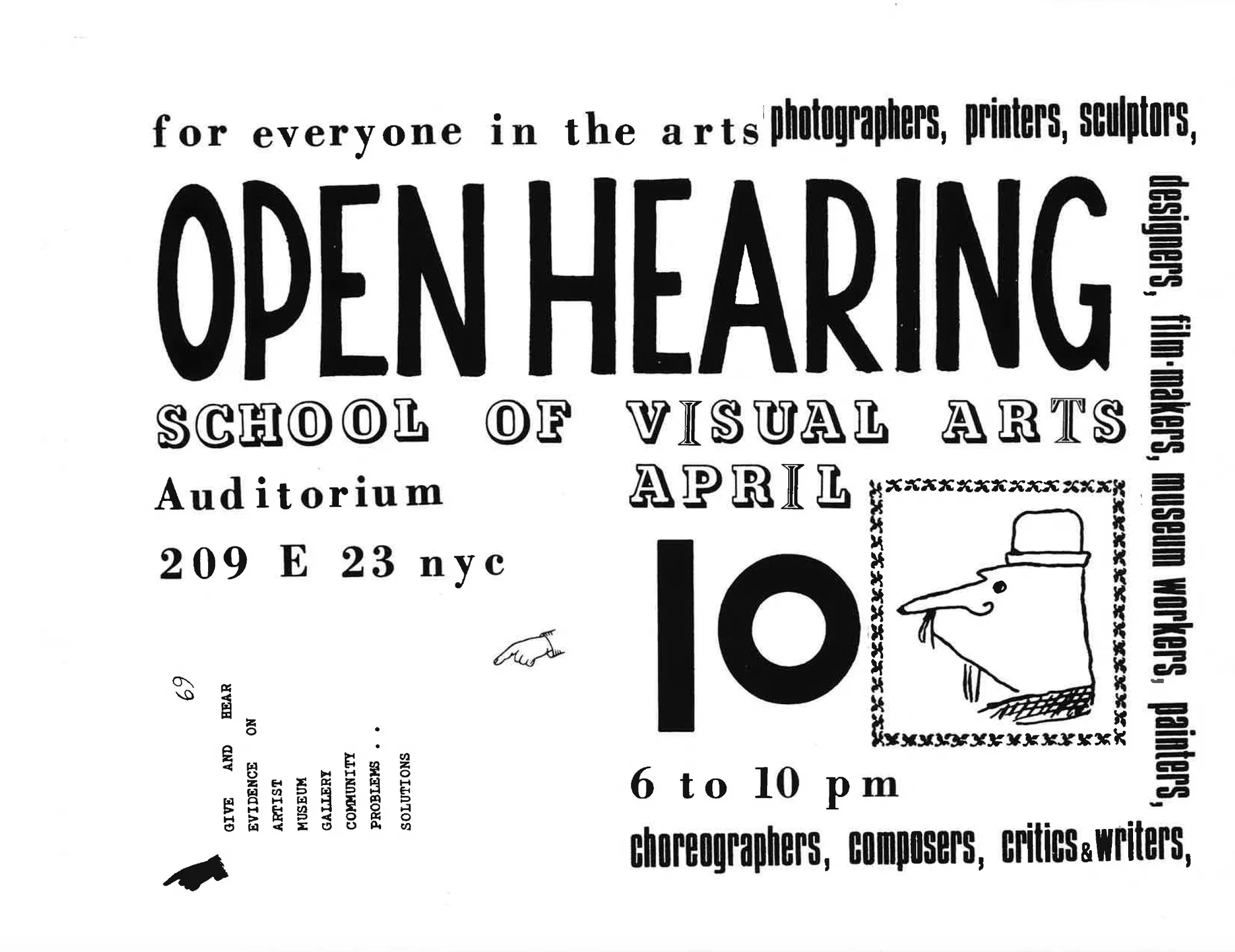
Following Takis's initial intervention, the AWC submitted a comprehensive reform proposal to MoMA three weeks later. The document outlined specific changes to what they deemed stagnant policies, including the establishment of a dedicated section showcasing Black and Puerto Rican artists. Additionally, the AWC demanded that an artist committee be granted curatorial authority and that artists receive compensation in the form of a "rental fee" for exhibiting their work. Furthermore, free admission was requested for all visitors. When these demands were met with resistance, the AWC organized its first public gathering at Manhattan's School of the Visual Arts, where hundreds of art workers, including prominent figures like Sol LeWitt and Faith Ringgold, shared their testimonies.
Read next ↗American Utopian Dreams Spanned a Decade.The Museum of Modern Art (MoMA) found itself at the center of a scathing critique from the AWC. This critique was not limited to MoMA alone but extended to the art world as a whole, with participants questioning its very foundations. Lozano's stance on the matter was clear: she refused to engage with dealers or attend events, instead opting for a more radical approach that merged personal and public revolutions. Her goal was nothing short of transforming the art world from within. Haacke, a conceptual artist known for his incisive critiques of museums and galleries, likened MoMA's curatorial judgment to the narrow-mindedness of a stamp collector. He advocated for a drastic decentralization of power away from Midtown's fashionable boutiques and into the heart of the city. By doing so, he hoped to create a more inclusive art world that valued diversity over commercial appeal. Andre, a minimalist sculptor, took an even more extreme stance. He believed that the solution to artists' problems lay not in reforming the existing system but in abolishing it altogether. For him, museum professionals were inherently flawed and best ignored by artists who sought genuine creative freedom. Mark Di Suvero's concise summary of his peers' sentiments echoed this sentiment: MoMA's apathy towards artists was a significant obstacle to artistic growth.
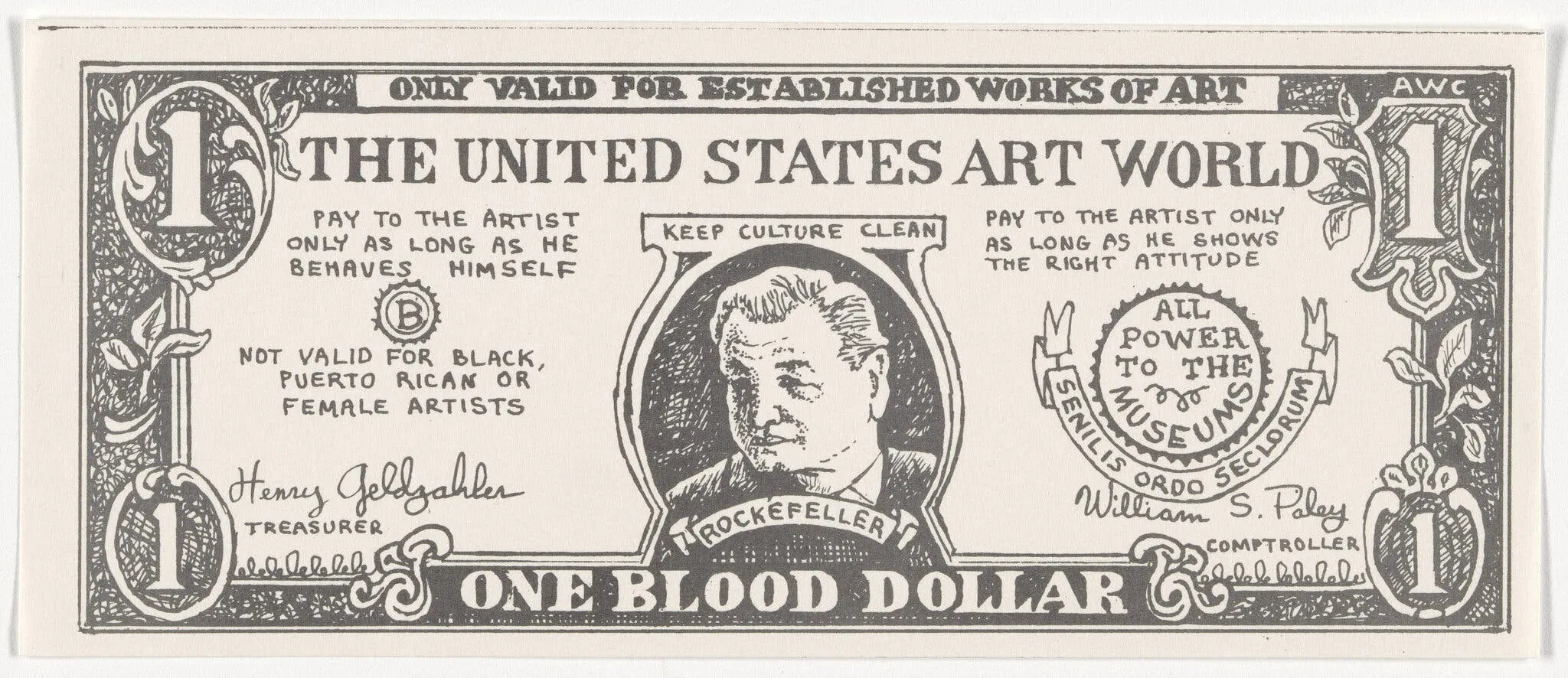
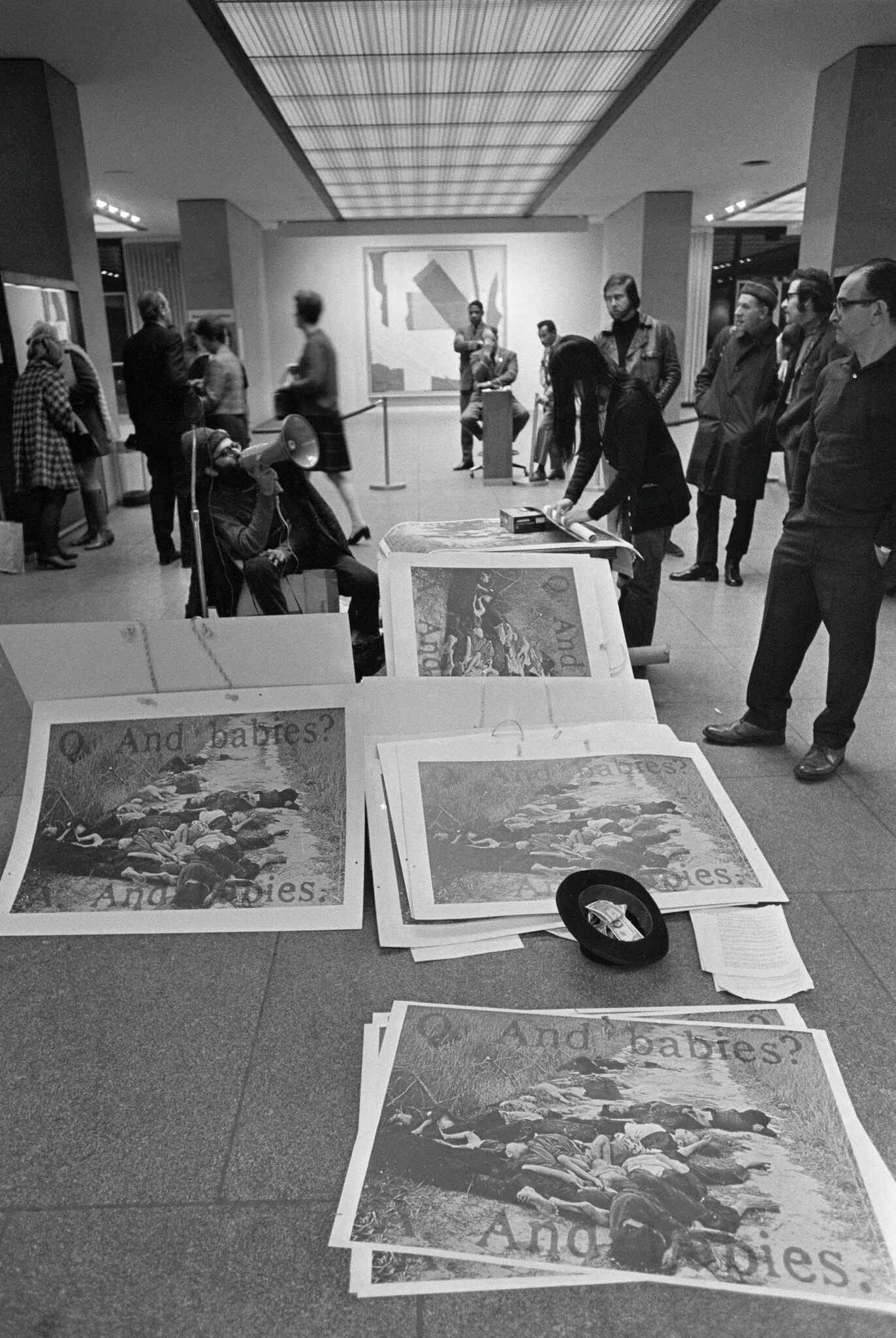
The atmosphere of the 1960s fueled the AWC's fervor, drawing it into the midst of tumultuous issues like racism, sexism, and abortion rights, as well as the escalating Vietnam conflict. The group's most enduring legacy lies in its unwavering commitment to social activism, particularly its efforts to pressure museums into taking a clear stance on the Vietnam War. A haunting visual representation of this activism is the 1970 poster "Q: And babies? A: And babies," which juxtaposes images of deceased Vietnamese civilians from the 1968 My Lai massacre with an excerpt from a televised interview between journalist Mike Wallace and U.S. soldier Paul Meadlo, who was questioned about his role in the massacre. Initially, MoMA's Executive Staff Committee had agreed to support and distribute this provocative poster as a gesture of goodwill, but ultimately reversed their decision after facing opposition from the museum's board of trustees, which included influential figures like New York Governor Nelson Rockefeller, a vocal supporter of the Vietnam War and William S. Paley, head of CBS. In response to MoMA's about-face, the AWC staged an impassioned protest within the museum, holding up copies of the poster in front of Picasso's powerful antiwar painting "Guernica," created in 1937. It is a poignant irony that this same poster now resides in MoMA's permanent collection.
The Artists' Workshop Collective (AWC) aimed to create a more equitable existence for creatives, free from the influence of affluent patrons and institutional gatekeepers. Their fervent protests still resonate today, echoing in the 2019 Whitney Biennial controversy surrounding Warren Kanders, a weapons manufacturer on the museum's board. The Met and Guggenheim witnessed die-ins staged by Nan Goldin's PAIN initiative in 2017, protesting cultural institutions accepting funds from the Sackler family, who profited from Purdue Pharma's Oxycontin sales. These acts of dissent demonstrated varying effectiveness but exposed the disconnect between artistic expression and financial backing – a disparity that could be bridged, according to the AWC. By shedding light on this gap, they challenged artists and art enthusiasts alike to reevaluate their relationship with the commercial forces driving the industry.
The art world's inner workings remain a mystery to many artists today. Despite this, the Artists' Workshop Collective's lasting impact may not lie in its advocacy for social justice or efforts to alter institutional practices, but rather in its innovative ideas about fairness and equity. Members debated various forms of wealth redistribution, including Di Suvero's proposal to impose a tax on the resale of deceased artists' work, which would be allocated to living artists in need. The concept of a basic annual income was also discussed. A more concrete achievement was the Artist's Reserved Rights Transfer and Sale Agreement, crafted by Seth Siegelaub, a dealer who organized early Conceptual art exhibitions, and Robert Projansky, a lawyer. This sales contract aimed to secure artists' perpetual stake in their work's value. Key provisions included a 15 percent royalty fee on resale profits, artist approval for loans of their work to institutions, and the right to know the buyer's identity – a radical stipulation, given that art buyers often prefer anonymity, especially as prices continue to rise.
The Projansky contract has become a relic of history, its impracticality evident as the art market experienced rapid growth in the '80s. Haacke still references it when selling his work, but its original intent was more conceptual than functional. It has, however, had a lasting impact on those envisioning an alternative model for buying, selling and exhibiting art. Collectors such as Kasseem Dean, also known as Swizz Beatz, have advocated for a 5 percent share of auction house profits to go directly to the artist whose work is being sold on the secondary market. This proposal draws parallels with the music industry's standard practices. In fact, Dean noted that even a 10 percent cut would be significantly more than what artists currently receive. Agencies like ICNCLST and art[cc]corp are now navigating similar territory, negotiating brand deals and terms on behalf of their clients, including Futura, Nina Chanel Abney, Sara Cwynar and Jacolby Satterwhite. These developments bear a striking resemblance to the framework proposed by AWC 60 years ago.
The Artists' Workshop Collective's existence was fleeting, lasting only two years before it fragmented into separate entities and vanished completely. Despite its limited impact, one of its most notable achievements is now visible at the Museum of Modern Art on Friday evenings when it extends its hours by a few hours. This move allows visitors to bypass the long lines that form outside for free admission, a policy many other institutions have since adopted in some capacity. When the ticket price reaches $30, however, this gesture can be seen as a reluctant compromise.
The economic reality for artists remains starkly divided between those who thrive and those who struggle to make ends meet. The latter face increasingly daunting challenges in securing studio space or affording rent without a secondary income source. Meanwhile, the midsize gallery network continues its decline, making it even harder for emerging artists to secure representation. While few fully adopted Andre's radical vision of abandoning traditional art world structures, his critique holds merit: AWC's proposals fell short of their ideals. Despite its shortcomings, the group's efforts offered a tantalizing prospect – an art world that, while not entirely liberated from capitalist influences, has become more equitable in its dealings with them.