Tech firms' long-sought guidelines could become law, specifically prohibiting AI use in domestic spying operations nationwide.
Legislation under consideration by Congress aims to curb the Pentagon's reliance on artificial intelligence, amidst a high-stakes dispute between the Defense Department and a prominent AI developer over regulatory boundaries.
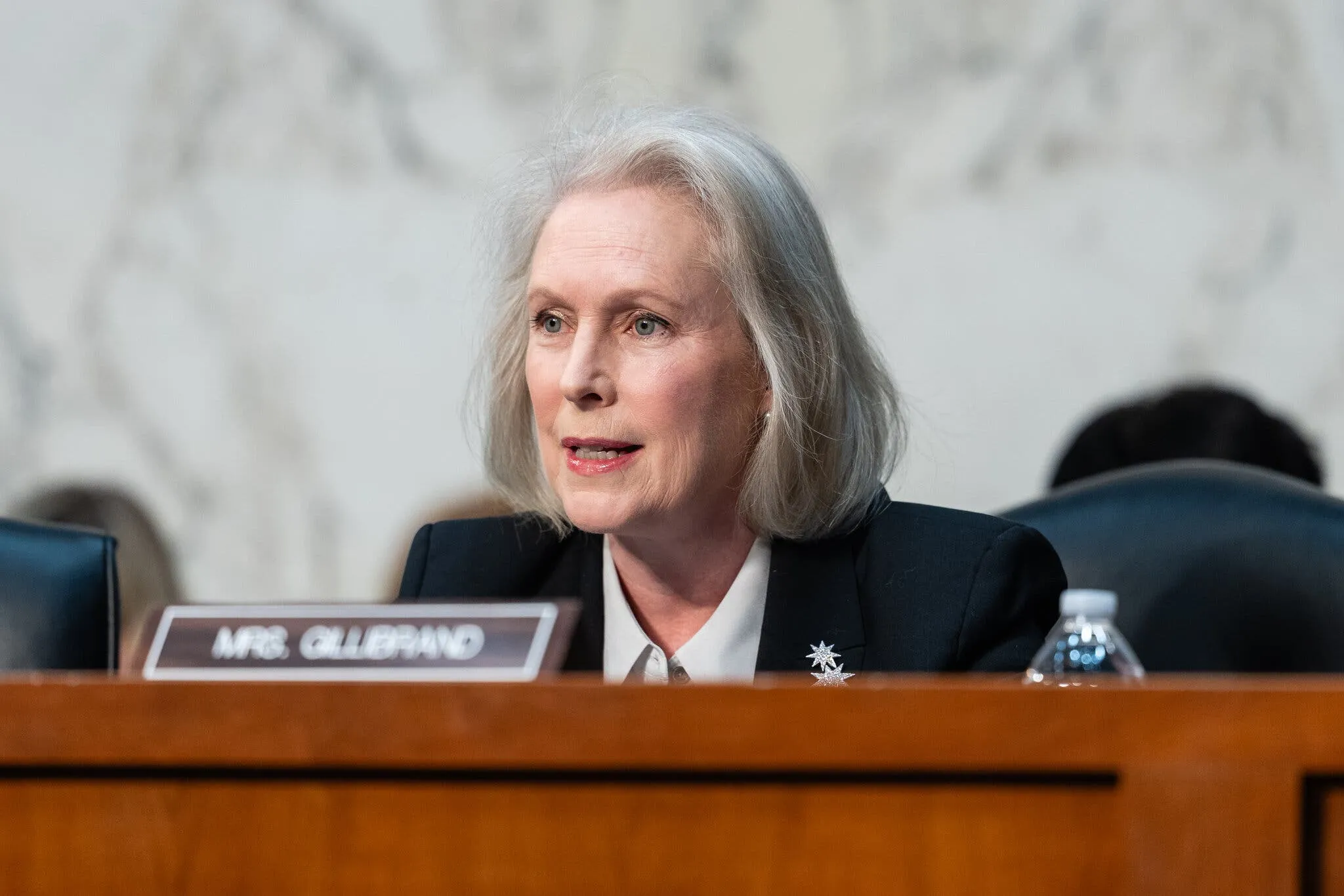
Related ↗Weak yen and AI sector growth drive Japanese export increase despite low volume sales.New York Senator Kirsten Gillibrand has proposed a bill to enhance oversight of artificial intelligence deployment within the US military system.
Senator Gillibrand has submitted her proposal as an independent bill, while also intending to incorporate it into the National Defense Authorization Act for consideration by amendment. The House Armed Services Committee is currently reviewing a version of the bill, with the Senate scheduled to initiate its review process the following week.
Read next ↗Ukraine employs AI technology to neutralize lethal Russian drones in mid-air operations.Bipartisan backing is being sought by Democrats pushing for stricter regulations on military AI use, as they reach out to Republicans in an effort to build consensus. Notably, Vice President JD Vance has publicly endorsed the underlying principles guiding these proposed measures.
A bipartisan A.I. bill written by Senator Elissa Slotkin, a Democrat from Michigan, is poised to be integrated into the Senate's defense authorization bill. This development reflects growing concerns among AI companies, which have sought similar protections in their agreements with the Pentagon throughout 2023. The measure would essentially formalize these safeguards for artificial intelligence firms.
Proposed legislative measures aim to prohibit AI deployment in domestic surveillance, drone autonomy and nuclear strikes.
The Defense Department's "any lawful use" standard has been accepted by tech giants OpenAI and Google, but another company, Anthropic, is at odds with the Pentagon over its AI model's potential misuse in domestic surveillance or autonomous drone operations.
The Pentagon's designation of Anthropic as a "supply-chain risk to national security" stalled negotiations, prompting concerns about potential restrictions on military contractors' dealings with the company.
A proposed restriction on autonomous weapon systems would limit the Pentagon's deployment, with an exception permitting the Defense Secretary to grant a waiver for its use.
Senator Gillibrand's legislation proposes certain exemptions for cybersecurity, missile defense systems and semi-autonomous weaponry. However for all other applications, the Department of Defense must obtain prior congressional authorization before deploying AI-controlled autonomous systems in military operations.
Human judgment is essential for making life-or-death choices, not just relying on a computer program's calculations. A machine's inability to experience emotions like love, loss, or grief severely limits its decision-making capabilities in critical situations. According to Senator Gillibrand, AI systems currently lack the crucial human elements required for sound judgment and strategic targeting.

Bipartisan backing exists for ensuring that humans, not artificial intelligence, are responsible for making strike decisions in warfare. In a commencement speech at the Air Force Academy on May 28, Vice President JD Vance referenced Pope Leo XIV's recent encyclical, which emphasized the importance of human oversight when using lethal force.
Human oversight is crucial in making life-or-death decisions on the battlefield to uphold traditional moral standards, a sentiment echoed by officials who advocate for human involvement in AI-driven warfare.
A human oversight is typically considered essential for authorizing lethal strikes, but the Pentagon's stance on autonomous weaponry is actually more complex than often portrayed.
A proposed policy, last revised in 2012 and updated just three years ago, prohibits the use of autonomous arms but only after thorough evaluation by high-ranking officials. Lethal autonomous systems must be disclosed to Congress before their deployment, with this requirement set to continue until at least 2029.
During a Senate hearing in May, the Pentagon's chief technology officer, Emil Michael, emphasized the need for a revised policy on autonomous weapons, citing rapid advancements by adversaries and valuable insights gained from the conflict with Iran.
Senator Joni Ernst, a Republican from Iowa, pointed out at the hearing that the Pentagon is seeking to allocate $55 billion for its Defense Autonomous Warfare Group, which focuses on autonomous and semiautonomous weapons development. The existing policy framework appears inadequate to accommodate emerging AI-driven technologies and other innovations in military applications.
The proposed legislation by Senator Gillibrand also addresses AI vulnerabilities, mandating that labs disclose instances of model theft, disrupted supply chains, or compromised data integrity immediately.
The legislation imposes stringent limits on the use of AI for domestic surveillance, specifically prohibiting the utilization of commercial or compromised data to analyze American citizens' information. The bill also restricts the development of AI models by the Defense Department and military intelligence agencies that would assign risk scores or make predictive assessments about potential threats to Americans.
Research into AI-powered surveillance technology has been underway by Chinese companies, with applications extending beyond identifying dissidents to anticipating potential critics of the state. The absence of evidence suggests the Pentagon is not currently involved in similar activities but Ms. Gillibrand's proposal could serve as a template for broadening restrictions on predictive assessments across government agencies.
The controversy surrounding Anthropic's involvement with the Pentagon has raised concerns about the potential domestic application of this emerging technology, sparking alarm among lawmakers.
Senator Gillibrand emphasized that preventing AI surveillance of US citizens by DoD was a top priority, echoing concerns raised during the Anthropic debate.