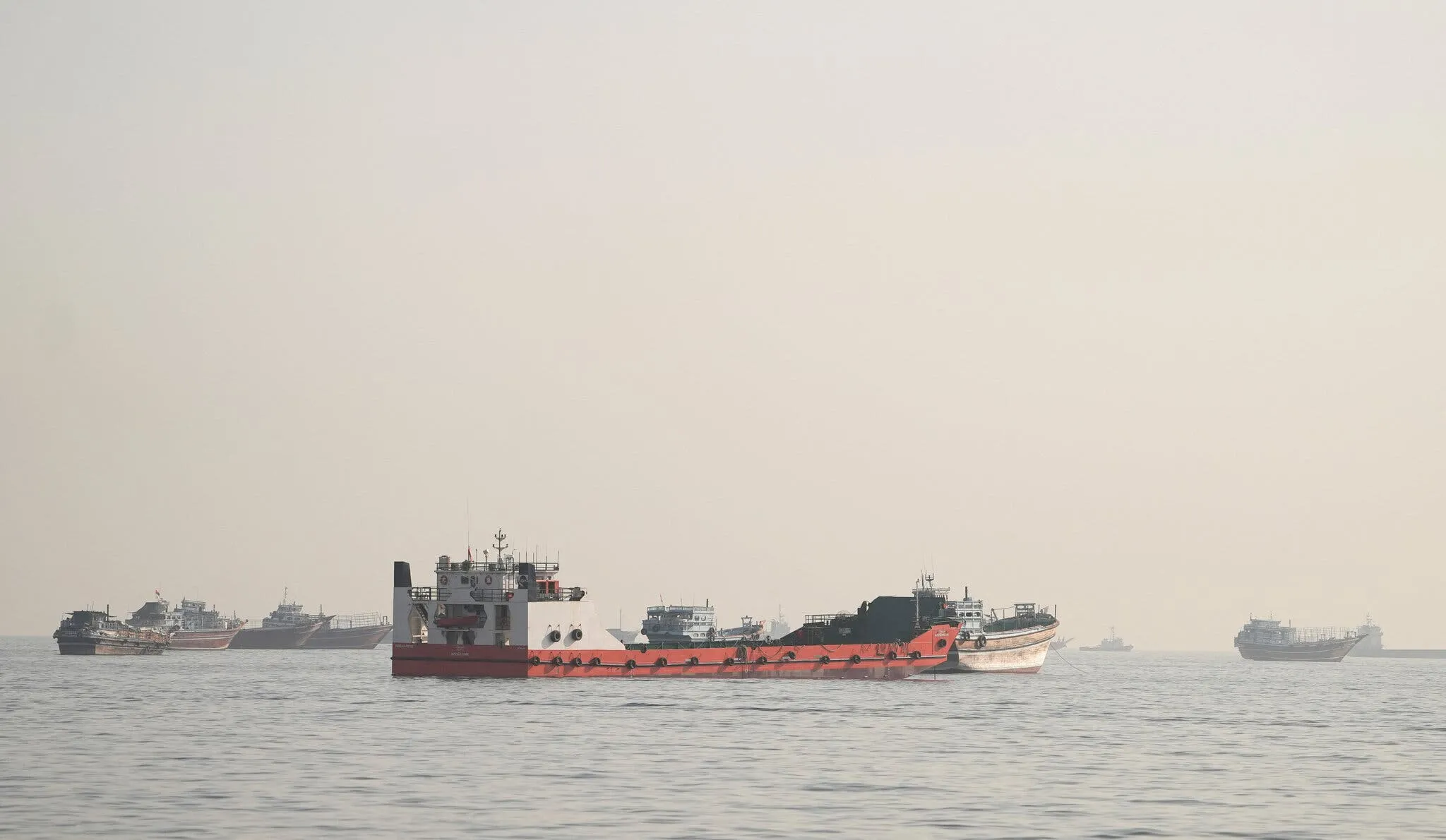
International law prohibits tolls, yet permits fees for specific services. The nature of these services remains unclear, particularly given that no fees were levied prior to the conflict.
President Trump's claim that the Strait of Hormuz would remain toll-free has been contradicted by Iran, which announced plans to impose fees for certain services within the waterway as of Monday.
Related ↗US President Trump condemns Israeli actions in Lebanon as deadly to non-combatants.Paying for passage through the Strait of Hormuz, a critical artery for global energy supplies, will introduce new expenses and complexities for commercial shipping, particularly since this requirement did not exist prior to the U.S.-Israeli conflict with Iran. This development may set a hazardous precedent for maritime trade globally.
Iran's foreign ministry spokesman Esmaeil Baghaei clarified on Monday that Iran intends to impose fees rather than tolls for passage through the Strait of Hormuz, but details about the specific services being provided remain unclear. The exact nature of these services is still unknown, although officials have hinted at potential environmental charges being assessed.
Read next ↗Details of the US-Iran ceasefire agreement will likely be disclosed shortly.Maritime law specialists emphasize a crucial distinction between charges levied as fees for services provided and payments collected as tolls for passage. Fees are permissible in specific situations, such as offering waste management at a port facility. However applying this concept to the Strait of Hormuz would be misapplied, according to these experts. Renaming a toll as a fee does not magically legitimize it; rather, it remains an unauthorized demand for payment in a waterway that has historically been free.
Following a series of attacks in late February, when US and Israeli forces targeted Iran, Tehran's response included retaliatory strikes on commercial vessels in regional waters. This incident sparked a new development: Iranian officials announced plans to impose fees on ships traversing the strait as early as March. By May, Iran had set up the Persian Gulf Strait Authority, which would oversee "safe passage permits" for waterway users.
In May, Iran engaged in talks with Oman to establish a payment scheme for ships traversing the Strait of Hormuz, based on service-related charges.
Legal analysts are skeptical about Iran's fee proposal standing up to scrutiny.
Maritime experts argue that international law does not permit coastal states to charge passage fees through natural waterways, regardless of terminology used. The absence of such provisions is evident in the unregulated navigation of straits like the Strait of Malacca and Taiwan Strait, where no tolls or fees are levied.
The management of artificial waterways, such as the Panama Canal and Suez Canal, involves coastal states providing various services and collecting revenue from users to fund their upkeep and maintenance costs.
Iran's stance on the Strait of Hormuz is clear: it's a natural waterway where the sole service being charged for is ensuring ships aren't attacked. However this protection doesn't qualify as a legitimate fee in international terms.
Concerns are mounting among global leaders over the prospect of a charge being implemented in the Strait of Hormuz, potentially derailing its return to prewar conditions. French President Emmanuel Macron emphasized his country's commitment to upholding international law, stating that all efforts will be made to prevent any toll from being imposed on the waterway.
The concept of Iranian tolls has been a contentious issue, with President Trump expressing opposition to it in recent months. However he has also floated the idea that the US could impose its own fees on the Strait of Hormuz as a victor of the conflict or propose revenue sharing.
Mr. Trump stated in May that passage through the Strait of Hormuz should be cost-free, explicitly rejecting the idea of tolls or charges.
Marco Rubio, Secretary of State, firmly opposed the concept of charging for passage through the Strait of Hormuz last month, deeming it utterly unacceptable and detrimental to diplomatic negotiations.