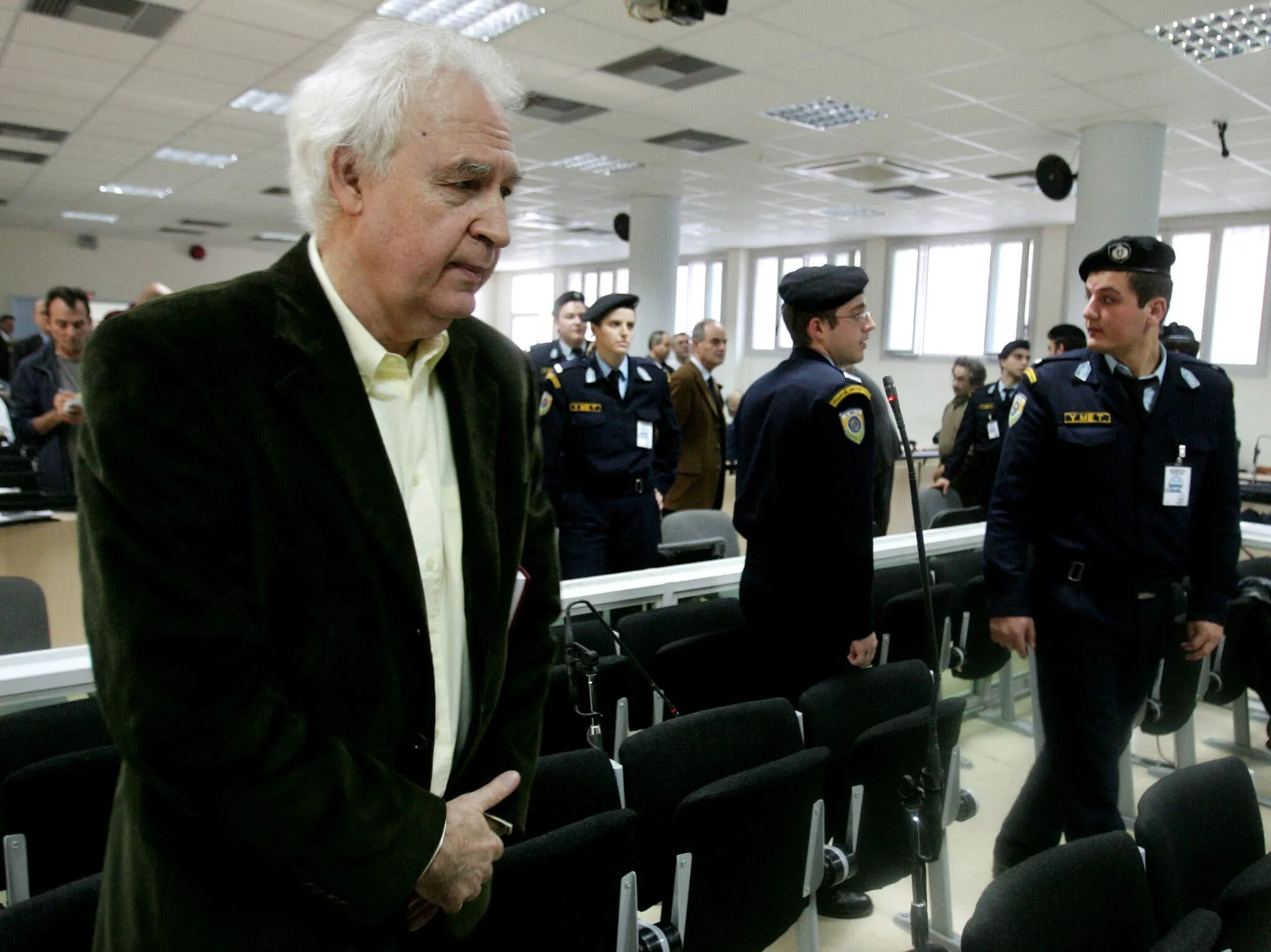
Greek militant leader Alexandros Giotopoulos, aged 82, was returned to prison after completing his sentence for heading the extremist group November 17.
A Greek militant leader's freedom was short-lived as he was ordered back into custody, just weeks after being released from prison, following a ruling by the nation's highest court on last Friday.
Related ↗US President Trump condemns Israeli actions in Lebanon as deadly to non-combatants.Greek militant leader Alexandros Giotopoulos, now 82 years old, had been serving a lengthy prison term of 17 life sentences for his involvement with November 17, an extremist armed organization responsible for the tragic loss of 23 lives. The group's activities spanned nearly three decades, from 1975 to 2002, and included the infamous assassination of a C.I.A. officer in 1975.
After serving time, Mr. Giotopoulos was granted freedom on May 21, following a court decision to approve his petition for release, which considered his advanced age and declining health as mitigating factors. His involvement in the group's activities remains vehemently denied by him.
Read next ↗Details of the US-Iran ceasefire agreement will likely be disclosed shortly.A court-ordered release was swiftly contested by a Supreme Court prosecutor, citing that Mr. Giotopoulos still had not served his full 25-year sentence. In Greece, prisoners serving multiple concurrent life terms typically gain freedom after approximately 25 years, yet Mr. Giotopoulos had submitted several petitions to be released early.
The Supreme Court's criminal division confirmed the prosecution's stance on Friday. Following the ruling, Mr. Giotopoulos will be temporarily held by police for a procedural examination before being returned to prison.
Vasiliki Kamilari, Mr. Giotopoulos's attorney, confirmed via text that her client would willingly surrender to authorities and resume his incarceration at Korydallos Prison in Greece, a maximum-security facility near Athens.
Criticism from victim families had been mounting against the decision to release Mr. Giotopoulos, who was linked to November 17 attacks. The U.S. Embassy's May 29 statement urging his return to prison drew condemnation from Greece's association of prosecutors and judges, who saw it as an overstep into their country's judicial domain.
A violent crackdown on November 17, 1973, led to the deaths of over 20 individuals as Greek authorities suppressed a student-led uprising against their military regime that year.
The militant group's violent activities spanned bombings, assassinations, and brazen bank robberies that funded their illicit endeavors. Notably, their deadly reach extended to prominent figures such as industrialists, politicians, and foreign officials, including Richard Welch, a C.I.A. station chief in Athens, tragically killed in 1975.
A bomb exploded prematurely in 2002, causing injury to one of the group's members and inadvertently leading to a significant shift in the authorities' understanding of their operations. This break ultimately facilitated the dismantling of the entire network.
Greek militant leader Mr. Giotopoulos is being returned to prison after his arrest on the island of Lipsi.
In 2003, a court handed down convictions to 14 additional members of November 17 on multiple charges, sentencing them to prison terms alongside their leader. Among those imprisoned is Dimitris Koufodinas, identified as the group's primary hitman by the judicial panel.