Criticism from G7 leaders mounts as they express disapproval over the US-Iran conflict escalating further. The welcome for a peace agreement is tempered by concerns about its long-term economic implications.
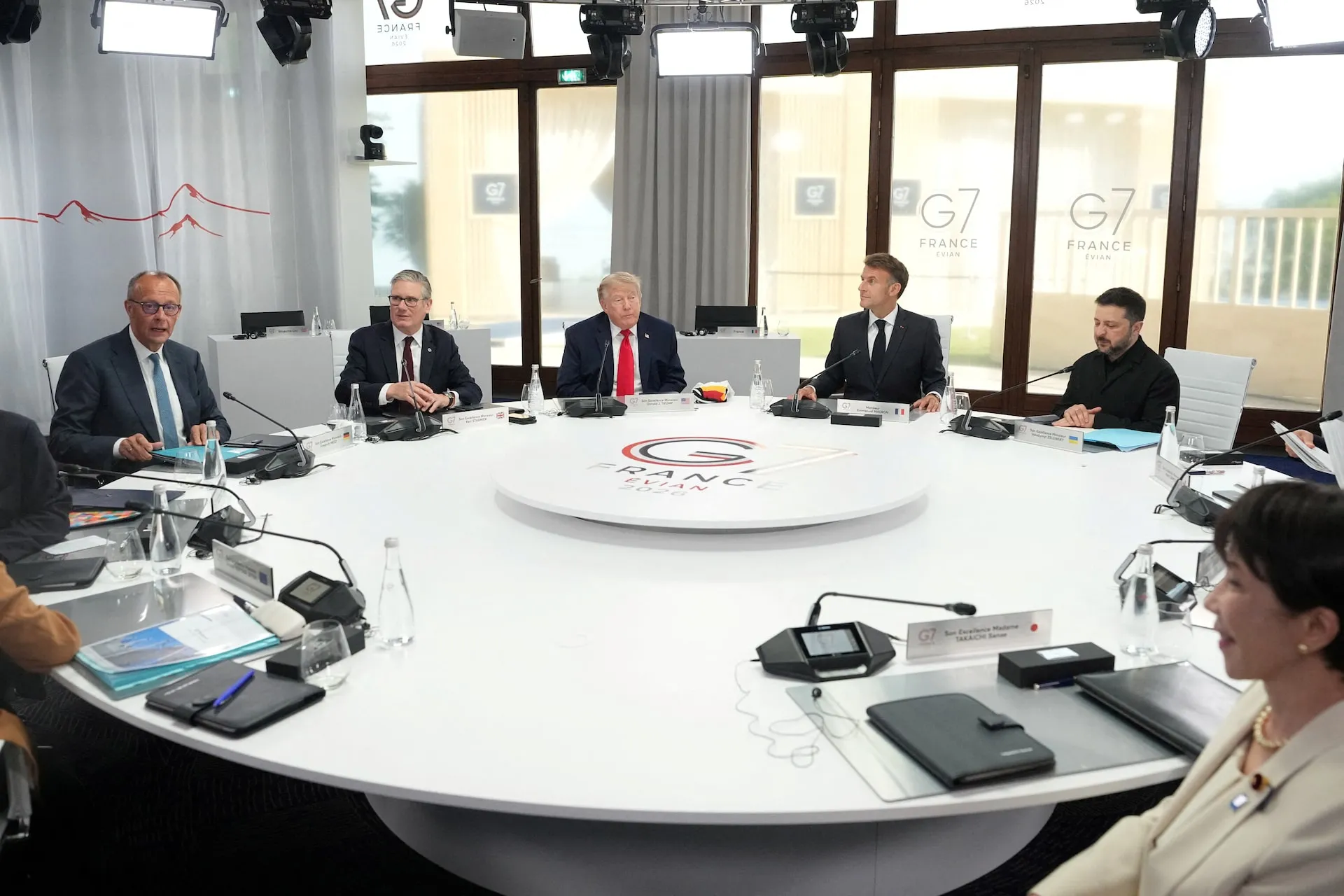
Global economic expansion is being hindered by a sharp increase in inflation and a 30% surge in oil prices, yet G7 leaders will likely sidestep attributing these issues to the ongoing tensions with Iran during their meeting in France on Wednesday.
Related ↗US President Trump condemns Israeli actions in Lebanon as deadly to non-combatants.G7 economies are reeling from the repercussions of Trump's escalating tensions with Iran, adding to their existing woes from US tariffs and NATO disputes, as well as the controversy surrounding Greenland.
Global markets received a boost as the US and Iran revealed a deal to cease hostilities and reopen the vital Strait of Hormuz over the weekend.
Read next ↗Details of the US-Iran ceasefire agreement will likely be disclosed shortly.The global economy is already bearing the brunt of the conflict: Energy costs have skyrocketed, reigniting inflationary concerns and threatening food shortages in emerging nations. In response, central banks are taking action, with the European Central Bank and Bank of Japan increasing interest rates to mitigate a potential inflation surge within the past week.
The ongoing conflict with Iran has left a lasting impression on British Prime Minister Keir Starmer, who expressed frustration over its effects on household energy costs. Meanwhile, Italian Prime Minister Giorgia Meloni cautioned against the war's far-reaching economic and social repercussions. This strain is also reflected in dismal approval ratings for key leaders like Merz and Macron.
At the G7 meeting, concerns over the war's economic repercussions were temporarily shelved due to a pressing need for unity, as cooperation from Trump is essential on multiple fronts, including Ukraine, NATO and trade negotiations.
Analysts warn that the G7, created in response to the 1973 oil crisis, is sidestepping a critical global economic issue, which may undermine its authority and effectiveness in managing future economic crises.
Marcelo Estevao, a top economist at the Institute of International Finance, points to U.S. policy decisions as an economic hindrance globally.
A major world power is compromising the potential for cooperation among G7 nations by pursuing a contentious agenda with Iran, undermining the group's ability to present a unified front. Meanwhile, emerging markets are increasingly dominating the global economic landscape, making it essential for G7 leaders to revitalize their organization's significance and influence.
10Tensions Mounting Globally
As the current G7 president, France has taken a proactive stance to prevent conflict by rejecting any efforts to release a comprehensive final statement or communique. Its focus is now centered on issuing declarations addressing specific topics like global economic imbalances and critical mineral supply chains.
The likelihood of a confrontation has decreased significantly following the agreement reached between US and Iranian negotiators prior to President Trump's departure for France.
Global economic stability is at risk of being upended if the current agreement collapses, according to economists who foresee severe consequences. However they acknowledge that resuming trade will be a gradual process, potentially taking several months or more. Meanwhile, experts in the fuel sector and maritime industries estimate it may take a year for bunker fuel supplies to recover.
Kristalina Georgieva, head of the International Monetary Fund, expressed optimism in a blog post on Monday after the G7 leaders' agreement in France. Her assessment contradicted her earlier warnings from two months ago, which had painted a dire picture. The world economy is currently stable, with no indication yet that a global slowdown is imminent despite its effects being felt across multiple regions.
The International Monetary Fund (IMF) is set to unveil a revised global outlook on July 8, its largest shareholder being the United States. A recent post by Georgieva hints at the IMF's potential decision to opt for the most bearable of three possible scenarios. This worst-case scenario assumes a brief Iran conflict and predicts a growth rate of 3.1% in 2026, down from 3.4% in 2025. In this dire forecast, economic expansion would plummet to just 2%, accompanied by inflation reaching 5.8%.
Oil prices have receded from their highs, and the United States' status as a fuel exporter has insulated it somewhat from more severe price fluctuations. The U.S. government maintains that the war's economic repercussions should be minimized as soon as possible once the strait is reopened. Meanwhile, European nations, which rely on imported fuels, are expected to avoid impending fuel shortages, according to officials privy to the Trump administration's strategic assessments.
17G7 Relevance Under Fire Again.
The G7's membership, comprising top European nations alongside the US, Canada, and Japan, is being scrutinized for its continued significance in a world where emerging powers like India, Brazil and China are rising rapidly.
Global economic dominance is slipping away from the G7, with its share of worldwide GDP plummeting to 44.1%, a significant decline from the initial 60.5%.
Despite controversy, members insist the G7's value lies in its ability to respond effectively during global emergencies like 2008-2009's economic downturn.
Former IMF strategy chief Martin Muehleisen notes that the G7 has consistently demonstrated its ability to formulate impactful decisions, which continue to influence roughly half of the global economy when necessary circumstances arise.
While formalities may prevail in group settings, sparks can fly in private encounters and informal gatherings, according to him.
Jubilee USA Network's executive director Eric LeCompte emphasizes that economic concerns persist even with the recent peace agreement and decreased fuel costs. "A simple trip to the local supermarket reveals the economy is in shambles, regardless of whether you're from a developing nation or not," he notes, highlighting the widespread impact of these issues.