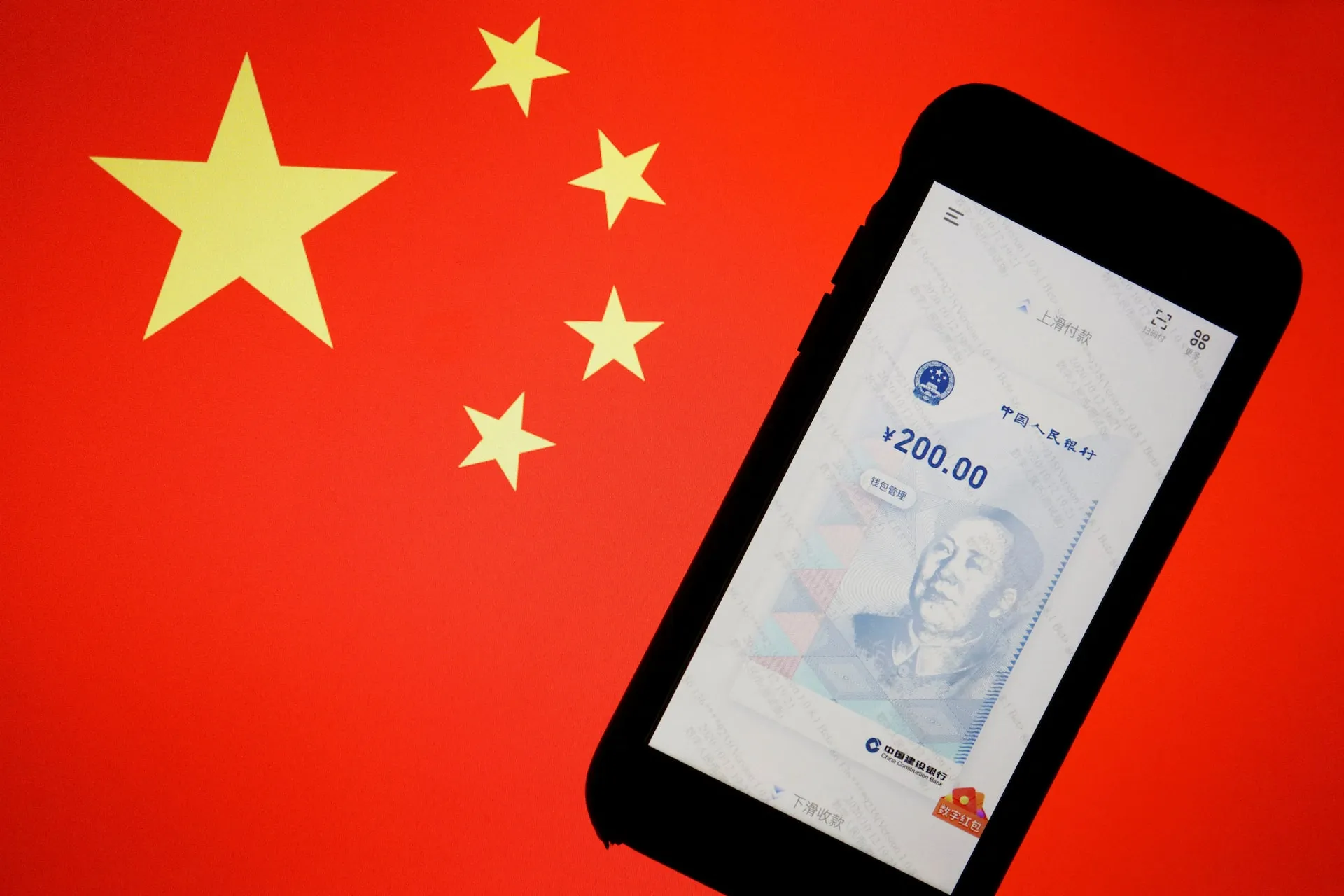
Beijing is stepping up initiatives to globalize the yuan, focusing on Shanghai's offshore market. The Chinese government has enhanced its framework for regulating liquidity in the domestic money market.
Beijing has introduced new initiatives on Wednesday to boost the international adoption of the yuan, while also implementing strategies to stabilize domestic financial markets amidst its economic overhaul.
Related ↗Economic growth in Northern Ireland outpaces rest of the UK post-Brexit.Financial authorities have pledged to cautiously expand access to China's financial sector during the Lujiazui Forum in Shanghai, where the nation is transitioning its economic focus towards tech-driven growth.
China's integration into the global financial system heightens concerns about cross-market risk contagion, warns Pan Gongsheng, PBOC governor. He vows to mitigate systemic risks as markets become increasingly interconnected and complex.
Read next ↗British inflation rate remains steady at a 13-month low beforehand.Shanghai's free trade zone has seen significant developments with six major state banks now cleared to facilitate offshore yuan dealings. These institutions, including Bank of China and China Construction Bank, are key players in this initiative.
Beijing's monetary authority has introduced an innovative financial instrument, the FIMA RMB Repo, allowing foreign central banks and sovereign wealth funds to access yuan liquidity with greater ease through high-grade Chinese bond collateral.
Chinese authorities have noticed a surge in foreign investment into the country's bond market, driven by increasing liquidity management needs.
Beijing is accelerating its drive to increase the yuan's use globally, seeking to minimize reliance on the US dollar-dominated international payments framework.
The People's Bank of China recently finalized partnerships with 26 key financial players in Shanghai through its digital yuan operation center, marking a significant step towards internationalizing the electronic currency or e-CNY.
09Currency Diversification Strategies
Pan stated that China intends to expand its range of overnight reverse repo transactions within the domestic market to improve liquidity management.
China's central bank is examining a new liquidity instrument designed specifically for non-bank financial entities during times of economic stress.
China's loan growth has experienced a slowdown over the past few years, whereas bond and equity financing have consistently increased. According to Pan, this trend is indicative of significant economic shifts and a reorientation of growth drivers.
China's credit expansion cannot sustain its former rate of acceleration, according to his statement.
MUFG's Marco Sun, a chief financial market analyst based in China, notes the PBOC's economic influence is shifting significantly.
Sun's observation highlights a shift in the PBOC's role from overseeing the banking system to actively managing market dynamics, including liquidity, capital costs and financial stability. This transformation reflects the central bank's evolving responsibilities in modern economic environments.
Regulators' warnings, including those from Pan, had a subdued impact on market sentiment. Meanwhile, Chinese stock prices remained relatively stable on Wednesday, with the yuan exchange rate holding firm.
17Mitigating Global Financial Vulnerabilities
China's top banking regulator made a commitment at the same gathering to safeguard against systemic financial vulnerabilities.
Newly appointed head Ding Xiangqun of China's National Financial Regulatory Administration is optimistic that regulatory measures will effectively mitigate risks associated with smaller financial entities.
Financial risk contagion has intensified globally over the past few years, a trend highlighted by Ding at the 2023 Lujiazui Forum in Shanghai.
Institutions are being urged to diversify their funding sources, increasing their ability to withstand financial shocks effectively.
Emerging sectors like robotics and AI are driving investment growth in China, while its economy faces a widening imbalance due to stagnant property and consumer markets.
China's dual-track economy showed signs of strain in May, as retail sales plummeted for the first time in nearly three years amidst sluggish investments.
Regulators are poised to channel financial support towards nascent sectors and enhance cross-border collaboration on new frontiers.
Ding emphasized that authorities will intensify efforts to combat illicit financial dealings and unfair market practices.
China's foreign exchange regulator, led by Zhu Hexin, announced new quotas for the QDII program at a recent industry gathering.
Beijing has intensified its focus on directing capital flows through approved pathways after a significant crackdown on illicit cross-border transactions occurred last month.
China's stock market is poised to fully integrate emerging technologies, while simultaneously implementing stricter regulations to prevent illicit trading practices and speculative activities.